When a couple already owns the usual kitchenware, linens, and home accessories, the best wedding gift is rarely another object. Look for something that preserves a memory, supports the life they are building, or gives them an enjoyable reason to spend time together. These 11 ideas are designed to feel personal without creating clutter, and each can be adapted to suit the couple’s routines, tastes, and stage of life.
A personalised memory display
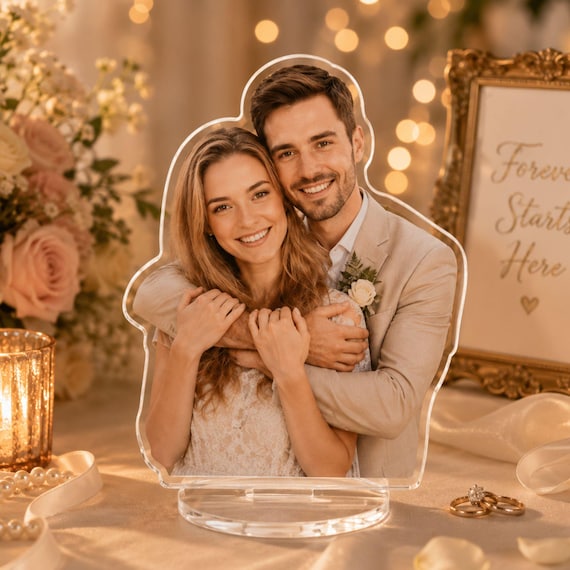
Choose a photograph that carries a real story rather than simply selecting the most polished image. It might show the couple in a meaningful place, include a beloved pet, or capture a family moment they will want to keep nearby. Before ordering, check the image quality, ask whether the couple prefers a desk, shelf, or wall display, and confirm the spelling of names and dates if personalisation is included. A custom acrylic photo standee can work particularly well for a couple who likes sentimental details but does not need more conventional homeware. The Custom Photo Acrylic Standee is designed as a personalised acrylic photo plaque and can also suit a pet portrait, family image, or remembrance gift. Give it context by pairing it with a short handwritten note explaining why you chose that particular photograph.
A personalised memory display
Shop the find ↗A planned date-night envelope set
Create a small set of date prompts that removes the effort of deciding what to do. Include ideas for different moods and budgets, such as cooking a recipe neither person has tried, revisiting the place of their first date, taking an evening walk with phones put away, or choosing a film connected to a shared memory. Write the practical details on each card so the gift is easy to use rather than merely decorative. A useful set should include low-energy options as well as special-occasion plans. You could label envelopes “at home,” “under an hour,” “try something new,” and “save for a free weekend,” then leave a few blank cards for the couple to add their own ideas. Avoid making every suggestion expensive or time-consuming; variety is what makes the gift sustainable after the wedding excitement fades.
A contribution to a specific future plan
Money can feel impersonal when it arrives without explanation, but a clearly named contribution can be both practical and heartfelt. Instead of simply giving cash, connect it to something the couple has mentioned: a weekend away, a garden project, a cooking class, a concert, or another shared goal. A note that says what you hope the contribution helps them do makes the gift feel intentional without dictating how they must spend it. Ask discreetly about the preferred format before sending anything, especially if the couple has a wedding fund, honeymoon plan, or home project already in progress. If several guests are likely to contribute, coordinate with close family or the wedding party to avoid everyone funding the same purpose. The most thoughtful version gives them freedom while showing that you have listened to what matters in their life together.
A recipe collection built around their story
Assemble recipes from people who care about the couple, but make the collection more personal than a stack of printed recipes. Ask contributors for one dish, the story behind it, and a practical tip such as whether it freezes well or what can be prepared ahead. Include a mix of everyday meals, celebration dishes, and simple comfort food so the collection remains useful beyond the first few weeks of marriage. Presentation does not need to be elaborate. A folder, binder, or digital document can work if every recipe is clearly labelled and easy to follow. Check measurements, cooking temperatures, and missing steps before compiling the final version, and ask contributors to identify common allergens or substitutions where relevant. Add a page at the front explaining who contributed each recipe; that social history is often more valuable than a perfect design.
A membership or pass chosen for their habits
A membership is worthwhile only when it fits the couple’s existing interests and location. Consider places they already visit or have said they want to explore, such as a museum, botanical garden, cinema, heritage site, or local attraction. Before buying, check the membership length, guest rules, booking requirements, blackout dates, and whether both partners can use it independently. The presentation can make a practical gift feel celebratory: include a short list of suggested first visits and explain why each one reminded you of them. Do not assume that a couple wants an activity-heavy lifestyle; a quiet cultural membership may suit them better than an ambitious adventure package. If you are unsure, a flexible voucher or contribution toward the membership may be more considerate than choosing on their behalf.
A professional service that gives them time back
The most luxurious gift for some couples is not another possession but relief from a task. Depending on their circumstances, you might arrange or contribute to a home-cleaning visit, garden help, meal preparation, dog walking, babysitting, or another service they already use. The key is to offer something that feels supportive rather than implying that their home, routine, or responsibilities need correcting. Check details before booking: preferred dates, access arrangements, dietary needs, cancellation terms, and whether the service provider is properly equipped for the job. A flexible voucher can be safer if the couple has a changing schedule. Include a note that gives them complete permission to use the gift when it is most useful, rather than expecting it to happen immediately after the wedding or during another busy period.
A time-capsule letter set
Give the couple prompts and envelopes for letters they can open at different points in their marriage. Useful prompts include “what we are learning this year,” “what we hope our home feels like,” “a difficult moment we handled together,” and “what we want to remember about ordinary life right now.” The prompts should invite honesty without turning the exercise into a performance for the gift giver. Include enough structure to make the idea easy to begin, but not so much that it becomes a chore. They could write one letter on the wedding day, another after their first year, and others whenever a major milestone arrives. If you include a storage box or folder, choose something that protects paper from light and moisture, and avoid promising that the letters will be opened on a particular schedule unless the couple wants that commitment.
A locally sourced food and drink hamper
Build a hamper around the couple’s actual preferences rather than filling a basket with generic treats. Think about whether they prefer coffee, tea, alcohol-free drinks, savoury foods, sweets, baking ingredients, or regional produce. Include a balance of items they can enjoy immediately and ingredients they can use for a meal, which makes the gift feel considered rather than like a collection of impulse purchases. Check dietary restrictions and storage needs before assembling it. Perishable products require careful timing, while alcohol may not suit every couple or venue, so alternatives should be just as deliberate rather than an afterthought. A handwritten serving suggestion can turn separate items into an experience: suggest a relaxed breakfast, a picnic, or a tasting evening, while leaving the couple free to use everything in their own way.
A contribution to a home project they have chosen
If the couple is improving a home, give toward a project they have already discussed instead of guessing at décor. A contribution could support plants, shelving, lighting, artwork, tools, or another clearly identified aim. Ask whether they have a preferred retailer, material, colour, or style before buying anything substantial; “helpful” home gifts can become awkward when they create a return or storage problem. You can make the contribution feel personal by adding a small symbolic item connected to the project, such as a packet of seeds for a garden or a note about the room you hope they enjoy using. Keep the main gift flexible where possible, because renovations and decorating plans often change. The most respectful approach is to support their decisions rather than trying to complete the room according to your own taste.
A shared class or workshop
Choose an activity that encourages the couple to learn or make something together, such as a cooking lesson, pottery session, dance class, photography workshop, or another interest they have mentioned. Look for options with accessible scheduling and beginner-friendly instruction, and check whether materials, equipment, travel, and refreshments are included in the stated cost. It is wise to confirm the couple’s comfort level before choosing an activity that is physically demanding, highly social, or tied to a fixed date. A voucher with a generous booking window may be better than tickets for a single session. Add a note explaining that the value is in having time together, not in producing something impressive; this keeps the experience relaxed if the finished result is uneven.
A practical annual ritual kit
Give the couple the ingredients for a tradition they can repeat each year. This might be a breakfast plan for their anniversary, a picnic checklist, a set of questions for an annual life review, or a simple ritual of choosing and printing one photograph from the previous year. The idea works best when it is easy enough to maintain during busy seasons and meaningful without requiring a large budget. Write the ritual as a short, adaptable guide rather than a list of rules. Include alternatives for bad weather, travel, illness, or years when the couple has limited time. You could provide the first year’s meal plan, conversation prompts, or photo-printing contribution, but leave room for them to change the tradition as their relationship develops. A gift like this gives them an ongoing reminder to notice ordinary milestones, not just major anniversaries.
A carefully curated memory box
A memory box is most useful when it has a purpose and enough space to grow, rather than becoming a container for random objects. Start with a few meaningful pieces such as a ceremony programme, a handwritten note, a photograph, or a small memento from an important shared place. Leave empty sections for future anniversaries, trips, celebrations, and everyday memories that would otherwise disappear into a drawer. Label the box with a broad description rather than an overly specific date if the couple may use it for more than the wedding. Protect delicate paper items with sleeves or envelopes, and avoid including anything valuable, irreplaceable, or difficult to store safely without asking first. A short inventory card can help them remember why each initial item matters, while still allowing the couple to take ownership of the collection over time.