
A cocktail birthday party can feel as carefully considered as a wedding reception without becoming stiff or overproduced. The difference is usually in the details: a clear guest experience, a balanced drinks menu, comfortable pacing, intentional styling and small moments that make people feel welcomed.
Start with a clear celebration concept
Choose one simple idea to guide the party before you book suppliers or buy decorations. It might be an evening of classic cocktails, a candlelit lounge gathering, a garden aperitif or a black-and-white drinks party. The concept should influence the invitation, colour palette, music, menu and dress guidance so the event feels coherent rather than assembled from unrelated ideas. Keep the concept practical. If the party is in a home, a relaxed cocktail lounge may work better than a formal ballroom theme. If guests will be standing for much of the evening, plan enough surfaces for drinks and small plates. A useful test is to describe the celebration in one sentence; if that sentence is too complicated, the styling will probably be too complicated as well.
Send an invitation that sets the tone
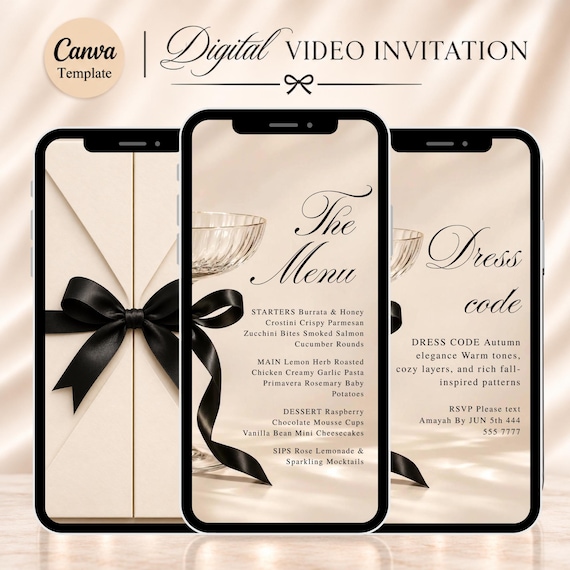
The invitation is the guest's first glimpse of the event, so make it do more than announce the date. Include the start and finish time, venue, dress guidance, parking or transport information, RSVP deadline and any detail guests need to feel prepared. For a cocktail party, specifying whether the format is drinks and canapés, a full meal or a dessert-focused evening prevents awkward assumptions. A polished digital invitation can create a strong first impression while making updates easier than printed stationery. The Luxury Cocktail Birthday Video Invitation, Animated Digital Party Evite, {{listing:4609685512}}, is a natural fit if you want an animated, cocktail-themed introduction. Before sending, test every link, check the wording on a phone and make sure the RSVP route is obvious rather than hidden in decorative text.
Send an invitation that sets the tone
Shop the find ↗Build a guest journey from arrival to farewell
Think through what happens during the first five minutes after someone arrives. Decide who greets guests, where coats and bags go, how they receive a welcome drink and how they find the main room. A small arrival station with water, a brief menu card and a visible host can remove uncertainty, especially when people do not all know one another. Plan the ending with the same care. Keep takeaway containers, taxi details or transport information accessible without making the exit feel rushed. If the party is at home, direct guests away from private rooms with layout and lighting rather than repeated instructions. Good hosting often feels effortless because the practical decisions were made before the first person arrived.
Design a drink menu with choice and restraint
Offer a short menu rather than trying to serve every possible cocktail. Two or three named cocktails, one sparkling option, a beer or wine choice and a thoughtful alcohol-free drink can cover different preferences without creating a confusing bar. Include the main ingredients on the menu, particularly if guests may need to avoid certain spirits, sweeteners or allergens. Choose drinks that can be prepared consistently. A batched cocktail reduces queues, while one made-to-order option adds theatre without making the bar the bottleneck. Avoid selecting several drinks that all require the same garnish, glassware or complicated finishing step; the menu should be enjoyable for the person serving it as well as the person drinking it.
Make the alcohol-free option feel intentional
An alcohol-free drink should be presented as part of the menu, not as an afterthought. Give it a proper name, serve it in the same style of glassware and finish it with an attractive garnish that is not reserved only for alcoholic drinks. Citrus, herbs, tea, sparkling water and carefully balanced syrups can produce a drink with depth without relying on alcohol. Keep alcohol-free bottles and mixers separate from spirits, and label them clearly if guests are serving themselves. It is also useful to provide still and sparkling water throughout the room rather than placing all hydration at the bar. Guests are more likely to pace themselves when water is easy to find and does not require interrupting a conversation.
Use glassware as part of the visual design
Consistent glassware can make a simple drinks table look considered. You do not need a different glass for every cocktail, but you should decide whether the overall mood suits coupes, tumblers, wine glasses or a mixture. If hiring glassware, count generously enough to avoid constant washing and keep a separate area for used glasses. Think about safety as well as appearance. Stemless glasses may be easier in a crowded home, while sturdy tumblers can work better outdoors. Mark reusable glasses with subtle charms or removable tags if guests are likely to set them down and forget which one is theirs. Avoid placing fragile glassware on narrow ledges, crowded tables or beside dance areas.
Serve food that supports conversation
Cocktail-party food needs to be easy to eat while standing, holding a drink or moving between groups. Include a mixture of one-bite items, small plates and something more substantial later in the evening. Choose foods that can be replenished in batches and that do not become messy as they sit out. Plan the serving sequence rather than putting everything out at once. Start with lighter bites, follow with more filling savoury options and finish with a sweet course or birthday dessert. Label foods containing common allergens and ask guests about dietary needs before finalising the menu. A beautiful spread that leaves some guests with little to eat is less successful than a simpler menu designed around inclusion and practicality.
Create one strong focal point
A single focal point usually looks more refined than many small decorations competing for attention. It could be the bar, a floral arrangement, the birthday dessert table, a backdrop for photographs or a dramatic dining area. Give that feature enough space around it so guests can see and use it without crowding. Use height, texture and light to make the focal point interesting without filling every surface. For example, a low arrangement can sit beside taller candles or menus, while a textured table covering gives a simple display more presence. Check the focal point from the entrance and from the places where guests will sit; a design that looks good only in one photograph may not work well in the room.
Layer lighting for an evening atmosphere
Overhead lighting alone can make a cocktail party feel like a meeting room. Combine general lighting with table lamps, wall lights, candles or other safe, low-level sources to give the room warmth and definition. Keep pathways and steps bright enough to navigate, while using softer light around seating and food areas. Test the lighting after dark and from camera-phone height. Guests should be able to read a menu, recognise one another and see what they are eating, but the room does not need to be uniformly bright. If using candles, protect them from sleeves, papers and passing guests, and place them where staff can monitor them easily.
Arrange seating for both comfort and mingling
A cocktail format does not mean everyone should stand all evening. Provide a mix of chairs, stools and perches so older guests, pregnant guests, people with injuries and anyone who simply needs a rest can participate comfortably. Place seating in small conversational groupings rather than lining every chair against the wall. Leave enough space around the bar, buffet and main route through the room. Furniture that looks elegant but creates a traffic jam will undermine the whole experience. If you are using a private home, identify a quiet place where guests can step away from the music. Comfort is one of the clearest differences between a party that looks polished and one that feels genuinely hospitable.
Plan a music arc instead of one long playlist
Music should support the changing energy of the evening. Start with something conversational during arrivals, raise the tempo gradually once guests have settled and leave room for a livelier final section if dancing suits the party. Avoid abrupt changes that make the event feel like a series of disconnected playlists. Prepare more music than you expect to need and download it if the venue's connection is unreliable. Check the volume from the farthest seating area, not only beside the speaker. A cocktail party depends on conversation, so louder is not automatically more celebratory. Assign one person to handle volume and track changes so the host is not repeatedly pulled away.
Add a birthday moment without stopping the whole party
Choose a short, clear moment for the birthday recognition. A toast, cake presentation, brief speech or group photograph can give the celebration a centre without turning it into a formal programme. Tell key participants roughly when it will happen, then signal the transition with a music change, a lighting adjustment or a host announcement. Keep speeches specific and concise. Ask speakers to share a memory, quality or wish rather than repeating general compliments, and make sure the birthday person knows whether candles, a cake knife or a microphone will be involved. If the venue is large, check that guests at the back can see and hear; a meaningful moment loses impact when half the room is trying to work out what is happening.
Give guests a natural way to connect
A wedding-level celebration feels welcoming because guests are helped into the social rhythm. Seat or stand people near at least one familiar face when possible, ask close friends to greet newcomers and introduce guests using a detail that gives the conversation somewhere to go. For example, mentioning a shared interest is more useful than simply stating two names. You can also offer a low-pressure interaction, such as a card box for birthday notes, a display of photographs or a question card at the bar. Avoid activities that require every guest to perform or compete. The best prompts create openings for conversation without making the party feel like a team-building exercise.
Style the tables for function as well as beauty
Every decorative choice should leave room for the items guests actually need. Keep menus small enough to read, place napkins where people can reach them and avoid centrepieces that block eye contact. If a table holds food, make sure serving utensils are visible and that guests can approach from more than one side when space allows. Repeat a few materials or colours across the room rather than buying a separate decoration for every surface. A consistent combination of paper, glass, fabric, greenery or metallic accents can make different areas feel connected. Remove anything that interferes with plates, glasses or conversation; a table is successful when it looks good after guests begin using it, not only before arrival.
Prepare a detailed run sheet
Write down the timing for deliveries, setup, guest arrival, food replenishment, the birthday moment, dessert, music changes and clean-up. Include contact details for suppliers and a short list of who is responsible for each task. This lets helpers make decisions without repeatedly interrupting the host. Build in breathing room. Food may arrive late, a speech may run over or guests may linger at the entrance, so avoid scheduling every minute. A flexible run sheet is more useful than a perfect timetable that collapses after one delay. Keep a printed copy in the event space and a digital copy accessible to the person coordinating the evening.
Plan for weather, accessibility and unexpected needs
If any part of the party is outdoors, decide in advance what happens if the weather changes. Have a realistic indoor layout, protection for food and electronics and a clear decision time for moving the celebration. Guests should not have to guess whether they need a coat, umbrella or different shoes, so include practical information with the invitation or in a reminder. Check entrances, bathrooms, seating and walking routes for accessibility. Make sure cords are covered, rugs are secure and steps are well lit. Keep basic supplies nearby, including stain treatment, plasters, phone chargers, spare napkins and a way to store leftovers. These details are rarely noticed when they work, but they can save the evening when something unexpected happens.
Finish with a thoughtful farewell
The last impression should feel like part of the celebration rather than the moment the host starts clearing up. Thank guests personally where possible, make coats and bags easy to retrieve and offer a final glass of water or a small sweet bite before they leave. If the birthday person is busy saying goodbye, designate someone else to manage practical departures. Afterward, preserve the details that matter. Save photographs in one organised place, note which menu items were popular and send a short thank-you message that refers to the evening rather than using a generic line. A polished party is not defined by expensive extras; it is remembered because guests felt considered from the first invitation to the final goodbye.


