
The most memorable Wild One parties are not necessarily the biggest or most elaborate. Guests tend to remember the details that make the celebration easy to enjoy: a clear theme, comfortable surroundings, food that works for different ages, and one or two thoughtful moments worth photographing.
A clear safari welcome
Give guests an immediate sense of the theme with one strong entrance detail rather than covering every surface with decorations. A simple welcome sign can say “Welcome to the Wild One,” point towards the party area, and identify practical essentials such as the bathroom, food table or gift spot. Place it where guests will actually see it when they arrive, especially if the celebration is in a garden, hall or shared venue. Keep the wording large enough to read from a few steps away, and choose a design that coordinates with the invitation so the party feels intentional from the first moment.
An invitation that sets expectations
The invitation is more than a decorative preview: it tells guests what to bring, where to go and how to prepare. Include the child’s name, date, start and end time, location, RSVP instructions, and any useful notes about outdoor clothing, parking, dietary needs or gifts. A safari-themed digital design such as {{listing:4454991742}} can establish the Wild One look before the party begins while leaving room for the practical information guests need. Before sending it, check the final text on a phone as well as a larger screen, and ask someone else to proofread the address and timing.
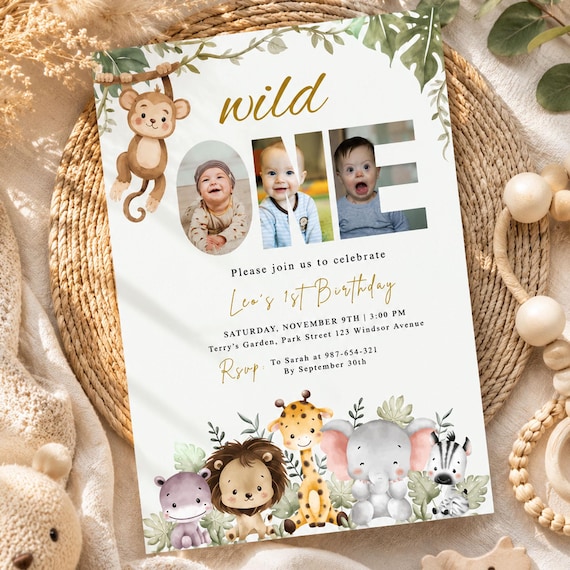
An invitation that sets expectations
Shop the find ↗A restrained animal colour palette
Choose two or three main colours and use them consistently across the tableware, signage, balloons, cake details and activity materials. Earthy greens, warm neutrals and one brighter accent can create a safari feeling without making the space visually noisy, but the best combination is the one that works with your venue and existing supplies. A common mistake is buying individual decorations because each one looks appealing, then discovering that the room has too many unrelated patterns. Before purchasing anything, lay out a quick colour plan and decide which items need to match exactly and which can simply sit within the same general palette.
A comfortable guest layout
Arrange the party around how people will move through it: arrival, food, seating, play and cake. Keep high-traffic areas clear, avoid placing drinks beside children’s play equipment, and leave enough room for a pram, changing bag or a guest who needs to sit away from the busiest activity. For an outdoor celebration, think beyond the prettiest setup. Provide shaded seating where possible, keep a weather alternative in mind, and place rubbish and recycling bins where guests can find them without interrupting the main gathering. Comfort is often noticed more than an extra decorative item.
A child-friendly food station
Serve food in a way that lets adults make quick choices while supervising children. Use clearly labelled dishes, keep small portions easy to pick up, and separate foods containing common allergens from other items with their own serving utensils. Ask families about dietary requirements in advance rather than trying to solve every need at the last minute. Include a mixture of familiar options and a few safari-themed touches, such as animal-shaped sandwiches or fruit arranged in sections. Keep decorations away from the food itself unless they are clearly food-safe, and place adult snacks at a height where young children cannot easily grab hot, sharp or unsuitable items.
A cake moment designed for photographs
The cake does not need to be enormous to become a memorable centrepiece. Choose one recognisable detail, such as an animal topper, leafy decoration or simple “Wild One” message, and keep the cake table uncluttered so the child and the cake remain visible in photographs. Plan the cake moment around the birthday child’s likely routine rather than a rigid schedule. Have the camera ready, clear the background, and keep wipes, a cloth and a small serving knife nearby. If the child is tired or overwhelmed, a quiet cake moment with close family can be more enjoyable than asking them to perform for a crowd.
A calm space for babies and toddlers
First birthdays often include guests who are not yet ready for energetic party games. Set aside a clean, visible area with a soft play mat, a few age-appropriate toys and enough room for a caregiver to sit beside a child. Avoid loose small parts if younger babies will be nearby. This space should not feel like a punishment corner or an afterthought. Keep it close enough to the main party that adults can continue conversations while supervising, but far enough from speakers, cake queues and running games to remain calm. A little separation can help both babies and grown-ups enjoy the event.
A simple animal-spotting activity
Give children a low-pressure activity that does not depend on everyone following complicated instructions. You might place animal pictures around the garden or room and invite children to find them, or create a simple card with pictures to tick off as they explore. Use large, securely fixed decorations and avoid hiding anything near steps, roads or fragile objects. Keep the activity optional and short. At a first birthday, children may prefer wandering, stacking cups or watching the adults, so do not build the whole schedule around a game that requires a group response. The goal is to create a few playful discoveries, not to run a formal competition.
A useful nappy and comfort station
A discreet care station can make the party much easier for parents. Place spare wipes, tissues, hand sanitiser, a changing mat and a small supply of rubbish bags somewhere easy to locate, and add a clear sign so guests do not have to ask the host for every item. If the venue does not have a convenient changing area, tell guests where the nearest suitable space is. Keep food, gifts and party supplies away from the station, and check it periodically during the event. This is an unglamorous detail, but it shows practical thoughtfulness and helps the host avoid being pulled away constantly.
A guest book with a specific prompt
Instead of asking guests to write a generic message, give them a prompt that produces more personal memories. Try “What should they always know about their first year?” or “What adventure do you hope they have?” Provide plenty of writing space, pens that will not smudge easily and a firm surface for people who are standing. You can place the book near the entrance so guests see it early, then move it to a quieter table once the party becomes busy. Add the date and child’s name to the first page, and consider asking one trusted person to remind close relatives to write before they leave.
A thoughtful photo area
Create one dependable place for group photos rather than trying to decorate every wall. A plain backdrop with a few leafy or animal-themed elements will make people easier to frame, while a clear floor area lets adults hold babies without stepping around furniture or bags. Tell guests where to stand, take both posed and natural photographs, and check that bright sunlight is not directly behind everyone’s faces. If children are involved, take the photograph before they become tired or covered in food. Designate one person to capture the essential combinations, including the birthday child with parents, siblings and grandparents.
A short, flexible party timeline
A loose running order helps the celebration feel organised without making a first birthday feel like a performance. You might plan arrival and free play first, food next, a short activity, cake and photographs, then relaxed visiting. Build in extra time because young children rarely follow an exact schedule. Share only the information guests need, and keep the detailed plan with the host or a helper. If the birthday child needs a nap, snack or quiet break, change the order without apology. A flexible timeline protects the mood of the party and prevents the adults from rushing through the moments that matter.
A safe approach to balloons and props
Balloons and animal props can create an instant safari atmosphere, but they need careful placement around babies and toddlers. Keep balloons securely out of reach, remove broken pieces immediately, and do not leave young children alone with balloons, ribbons or small decorative parts. Use props where they add a clear purpose, such as framing a photo area or marking the cake table, rather than spreading them across floors and walkways. Check the setup at child height before guests arrive: look for loose tape, sharp edges, unstable stands and anything that could be pulled down.
A drinks station that serves everyone
Make drinks easy to find and easy to identify. Offer water alongside other refreshments, include cups suitable for children and adults, and label anything that is sparkling, caffeinated or intended only for grown-ups. A drinks station near seating reduces queues at the food table and helps guests serve themselves while keeping an eye on children. For an outdoor party, consider how drinks will stay cool and where used cups will go. Put a small stack of napkins nearby, but avoid placing the station next to the play area where spills can create slippery surfaces. Refill it before it becomes empty rather than waiting for guests to ask.
A meaningful first-year display
A small display of photographs can make the party feel personal without turning the room into a gallery. Choose a few images that show change across the first year, add simple month labels if helpful, and arrange them where guests can pause without blocking the food or entrance. Use copies or digital images rather than irreplaceable originals, and secure everything firmly if children can reach it. The display can also give relatives who live far away an easy conversation starter. Keep the selection edited: a handful of well-chosen photographs will be easier to view than dozens packed tightly together.
A considerate gift plan
Tell guests your preference about gifts before the party if you have one. You may suggest books, second-hand items, contributions to a future experience or no gifts at all; the important part is to make the wording warm and unambiguous so guests are not left guessing. Set up a clearly marked gift area away from the main play space, and ask a helper to note who brought each present. If opening gifts during the party would make the child overwhelmed or the event too long, say so in advance and thank everyone for understanding. A simple plan also prevents gifts from becoming a trip hazard.
A favour guests can actually use
If you offer a take-home favour, choose something useful, edible where appropriate, or genuinely connected to the child’s age group. A small packet of seeds for grown-ups, a simple activity sheet or a themed bookmark can be more welcome than another plastic object that has to be stored. Keep favours separate from food that could create allergy concerns, and label anything containing ingredients. Place them near the exit with a sign so guests can take one without interrupting the host. You do not need one for every person if the event includes babies and adults with different needs; a clearly explained shared option can work just as well.
A weather and backup plan
Outdoor safari themes are appealing, but guests will remember whether they were prepared for the conditions. Check the forecast close to the date, identify shaded and covered areas, and decide in advance what will move indoors if the weather changes. Protect paper signs, food and electrical equipment rather than trying to improvise once the party has started. Tell guests about the plan if footwear, coats or sun protection may matter. Keep a small host kit nearby with tape, scissors, wipes, stain remover, plasters and spare serving items. The backup does not need to be elaborate; simply knowing what moves first can reduce stress and keep the celebration welcoming.
A closing moment that feels personal
End with something small that marks the child’s first year, such as a family toast, a short thank-you speech or a group photograph with the birthday child. Keep it brief and avoid putting the child under pressure to sit still or respond. Guests will appreciate a clear closing cue, especially if children are becoming tired. Afterwards, thank people for coming and tell them how they can share photographs if you want copies. Make a note of specific help received while the details are fresh, and send personal thanks rather than relying only on a general social post. The final impression should be gratitude, not a rushed scramble to clear the room.


