Guests begin forming an impression of a graduation celebration before the graduate walks across the stage. They notice whether the event is easy to find, comfortable to enter and thoughtfully prepared for different needs. Use this checklist to refine the practical details that make the first few minutes feel welcoming rather than chaotic.
A clear, accurate invitation
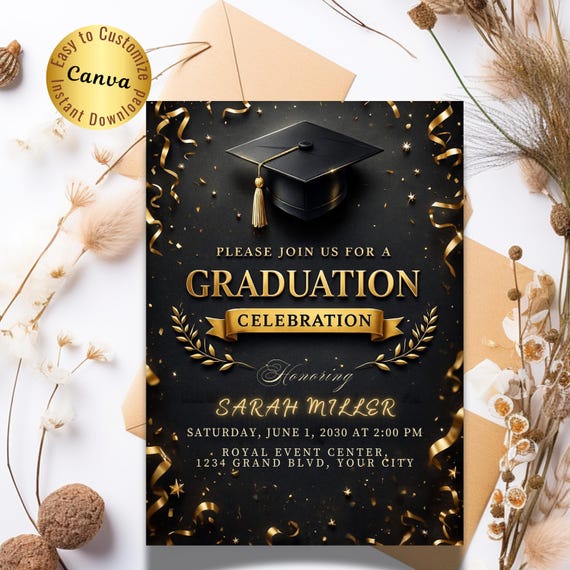
The invitation is often the first practical detail guests encounter, so it should answer the questions they are most likely to have: who is graduating, what is being celebrated, when guests should arrive and where they should go. Check the date, start time, address, venue name and RSVP instructions together rather than copying each detail from memory. If the party follows a separate ceremony, say so plainly and include enough timing information for guests to plan the transition. A clean digital design such as {{listing:4420158482}} can help organise the essential information, but the wording matters more than decorative extras. Avoid squeezing directions, dress guidance and parking notes into tiny type.
A clear, accurate invitation
Shop the find ↗A visible welcome point
Guests should be able to tell where the celebration begins within a few seconds of arriving. Place a welcome sign, table or simple cluster of decorations where the path from the entrance naturally leads, rather than hiding it behind food tables or furniture. A welcome point can do several jobs at once: greet visitors, confirm they are in the right place and direct them towards coats, seating, refreshments or a guest book. Keep the wording short and the lettering readable from several steps away. The common mistake is creating a beautiful sign that is positioned too low, faces the wrong direction or blends into a busy background.
Easy-to-follow directions
Even guests who know the general area may hesitate when they reach a large building, shared venue or unfamiliar driveway. Give useful landmarks and specify the entrance to use, especially if the venue has multiple doors. If parking is not immediately obvious, explain where guests should leave their cars before they arrive. Send updates when practical details change, and make sure the information on the invitation matches any message shared later. Do not rely on a single handwritten arrow at the last turn; weather, parked vehicles or another event can make it hard to spot. A small collection of consistent signs is usually more helpful than one oversized sign at the venue.
A calm arrival flow
The first few minutes feel much more welcoming when arriving guests do not have to cross through a queue, food preparation area or crowded doorway. Walk through the route yourself before the party and notice where people are likely to stop, remove coats, greet one another or ask questions. Keep the entrance sufficiently open for guests carrying gifts, bags or mobility equipment. If several households may arrive together, avoid placing a narrow table directly inside the doorway. A host or clearly designated helper can guide people towards the next step while the graduate and family remain available for greetings.
An obvious place for coats and bags
Guests notice quickly when they have nowhere sensible to put personal belongings. Decide in advance whether coats should go on a rack, over chair backs or in a separate room, and make that choice visible with a small sign or a host's verbal welcome. Keep valuable or fragile items away from food, drinks and high-traffic areas. If the event is outdoors, provide a dry, shaded place for bags rather than assuming guests will keep everything on their laps. The aim is not a formal cloakroom; it is simply to prevent the entrance and seating areas from becoming cluttered before the celebration has properly begun.
Comfortable first seating
Guests often look for somewhere to stand or sit before they decide what to do next. Provide a mix of seating if possible, including chairs for older relatives, anyone who tires easily and guests who may not be comfortable standing during the first conversations. Arrange some seats where people can talk without blocking the main route. Avoid placing every chair in a rigid row unless guests are about to watch a formal presentation. A few small conversational groupings can make an early arrival feel relaxed, while a clear space near the front can preserve visibility for the graduate and family photos.
A sensible temperature plan
Guests notice temperature before they notice many decorative details. For an indoor party, test the room at roughly the time guests will arrive and consider whether sunlight, cooking equipment or a full room will change how it feels. For an outdoor gathering, think about shade, wind and the temperature later in the day rather than only the conditions at setup time. Make comfort easy without creating a complicated system. Position seating away from direct drafts, secure lightweight decorations and keep chilled or hot refreshments in suitable places. Do not assume that one fan, heater or shaded corner will serve everyone; arrange the space so guests can choose a more comfortable spot.
A clean, uncluttered visual first impression
Before guests focus on the graduate, they take in the condition of the space. Clear packaging, spare boxes, cleaning supplies and setup tools from the entrance and the main sightline. A tidy background often makes a larger difference than adding another decoration. Choose a few visual elements that support the celebration, such as school colours, photographs or a display of meaningful achievements, and give each one enough room to be seen. A common mistake is placing every item at eye level, which creates visual noise and makes the most personal pieces easy to miss. Edit the display just before guests arrive.
A photo display with a viewing plan
Photographs attract attention immediately, especially when they show the graduate at different ages or mark important milestones. Place the display where guests can pause without blocking the entrance, buffet or route to the seating area. Vary the heights slightly, but secure every frame so it cannot be knocked over by a bag or passing sleeve. Add brief labels only when they help guests understand the moment or recognise people in the photograph. Too many captions can turn a warm display into a reading task. If you plan to add a new graduation photograph during the event, leave a deliberate space for it rather than making the arrangement look unfinished at the start.
A clearly identified refreshment area
Guests often look for water or a drink soon after arriving, so refreshments should be easy to find without forcing people to ask. Keep drinks separate from food if space allows, and place cups, napkins and a bin where they are needed rather than at the far end of the room. Label options that may not be obvious, including alcohol-free drinks, common allergens and vegetarian or vegan dishes when relevant. Do not put the most popular items in a narrow corner where a queue blocks the entrance. Refill before a container is completely empty, because a half-cleared table can make the party feel underprepared even when more supplies are nearby.
Food that is ready at the right moment
Guests notice whether they can eat comfortably, not whether every dish is elaborate. Put out food that can be served without complicated instructions, and make sure serving utensils are available for each dish. If the ceremony is close to the party, offer something that can be eaten easily while people are still arriving rather than waiting for a formal meal. Plan the first hour separately from later refreshments. Cover or chill food as needed, keep hot items in appropriate equipment and avoid placing delicate dishes in direct sun. A frequent mistake is spending so much time on presentation that the host forgets to make the food accessible, labelled and easy to replenish.
A route that works for different mobility needs
A guest should not have to announce a mobility need in order to enter, sit down or reach the refreshments. Check the route for steps, loose rugs, narrow gaps and furniture that reduces turning space. If there is an alternative entrance, explain it in advance and make sure it is genuinely open and usable when guests arrive. Leave enough room around chairs and tables for people to move safely, and avoid treating accessible seating as an afterthought at the edge of the celebration. If the venue has limitations, communicate them honestly so guests can plan. Small changes, such as moving a plant or widening a passage, can improve the experience without changing the whole layout.
Useful bathroom information
Guests may look for the bathroom almost immediately, particularly after travelling or attending the ceremony first. Make the route obvious with a discreet sign or a host's welcome, especially when the room is down a corridor or on another floor. Check that the path is well lit and free of stored supplies. Before arrival, restock toilet paper, hand soap and clean towels, and empty the bin if necessary. If there is more than one bathroom, direct guests to the available options so one room does not receive all the traffic. This is a small detail, but its absence is memorable for all the wrong reasons.
A plan for gifts and cards
If guests may bring cards or gifts, provide a defined place for them before the doorway becomes crowded. A table with a simple sign can prevent presents from being left on chairs, under coats or beside food. Keep the table stable and position it where the graduate or a trusted helper can keep an eye on it without making guests feel monitored. If you do not want gifts, say so politely on the invitation or in a message before the event. If gifts are welcome but space is limited, decide how they will be moved safely once the display fills. The important point is to remove uncertainty before guests arrive, rather than improvising a solution in the middle of greetings.
A guest book or message station that is easy to use
A message station works best when guests can understand it without asking for instructions. Provide pens that actually write, enough space to rest a hand and a prompt that invites more than a signature, such as a favourite memory or a wish for the graduate's next chapter. Place it somewhere visible but not in the narrowest part of the entrance. If guests are likely to arrive in groups, leave room for two or three people to write at once. Test the materials before the party and decide where completed pages will go; otherwise the station can quickly become untidy or run out of usable supplies.
Music at a considerate volume
Music sets the atmosphere as soon as guests enter, but it should support conversation rather than compete with it. Start with a lower volume and adjust only after the room fills, since an empty space can make the same setting seem louder than it will later. Place speakers so sound is distributed rather than concentrated beside the entrance or dining table. Prepare a playlist long enough to avoid awkward repetition, and check that lyrics or themes suit the age range and tone of the gathering. Keep a simple backup option available in case the connection or device fails.
A visible schedule for the first moments
Guests feel more at ease when they know whether they should eat, find a seat, take photographs or wait for a formal welcome. You do not need a minute-by-minute programme; a short outline near the entrance can be enough. Include only genuine milestones, such as a toast, meal, photograph or time to leave for the ceremony. Use a host to announce any change that affects everyone, especially if the ceremony schedule shifts. Avoid promising an exact time for every informal activity, since delays are normal at celebrations. The goal is to reduce uncertainty, not to make a graduation party feel like a conference.
A plan for weather and last-minute changes
Outdoor celebrations require guests to notice more than the decorations: they look for shelter, shade, stable flooring and signs that the event can continue if conditions change. Decide in advance what will move indoors, where food will go and who will communicate a change of location. Share the backup plan as soon as it becomes necessary, using the same contact method guests already recognise. Secure signs and decorations against wind, protect paper materials from damp conditions and avoid placing seating where rainwater may collect. A practical contingency plan is more reassuring than trying to conceal uncertainty until the last minute.
A host who is ready before guests arrive
The most noticeable detail may be whether someone is prepared to welcome people. Assign specific jobs before the event: greeting, answering questions, watching the food, helping with directions and checking the graduate's schedule. This prevents every request from landing on the graduate or one overwhelmed family member. Finish personal preparation early enough to walk through the space as a guest would. Check the entrance, signs, bathrooms, seating, refreshments and presentation areas in that order. Once the first guests arrive, stop making nonessential changes and focus on introductions. A calm welcome makes small imperfections feel intentional rather than unfinished.
A thoughtful goodbye point
Guests notice at the end whether leaving feels as organised as arriving. Keep a clear route to the exit, make sure guests can retrieve coats and bags without searching and place any takeaway treats or thank-you notes where they will not be forgotten. If the celebration connects to a separate graduation ceremony, remind guests of the next timing or travel detail before they leave. A host can offer a warm goodbye without turning it into a formal receiving line. Ending with clear information and genuine thanks leaves guests remembering the graduate's achievement rather than the rush of packing up.