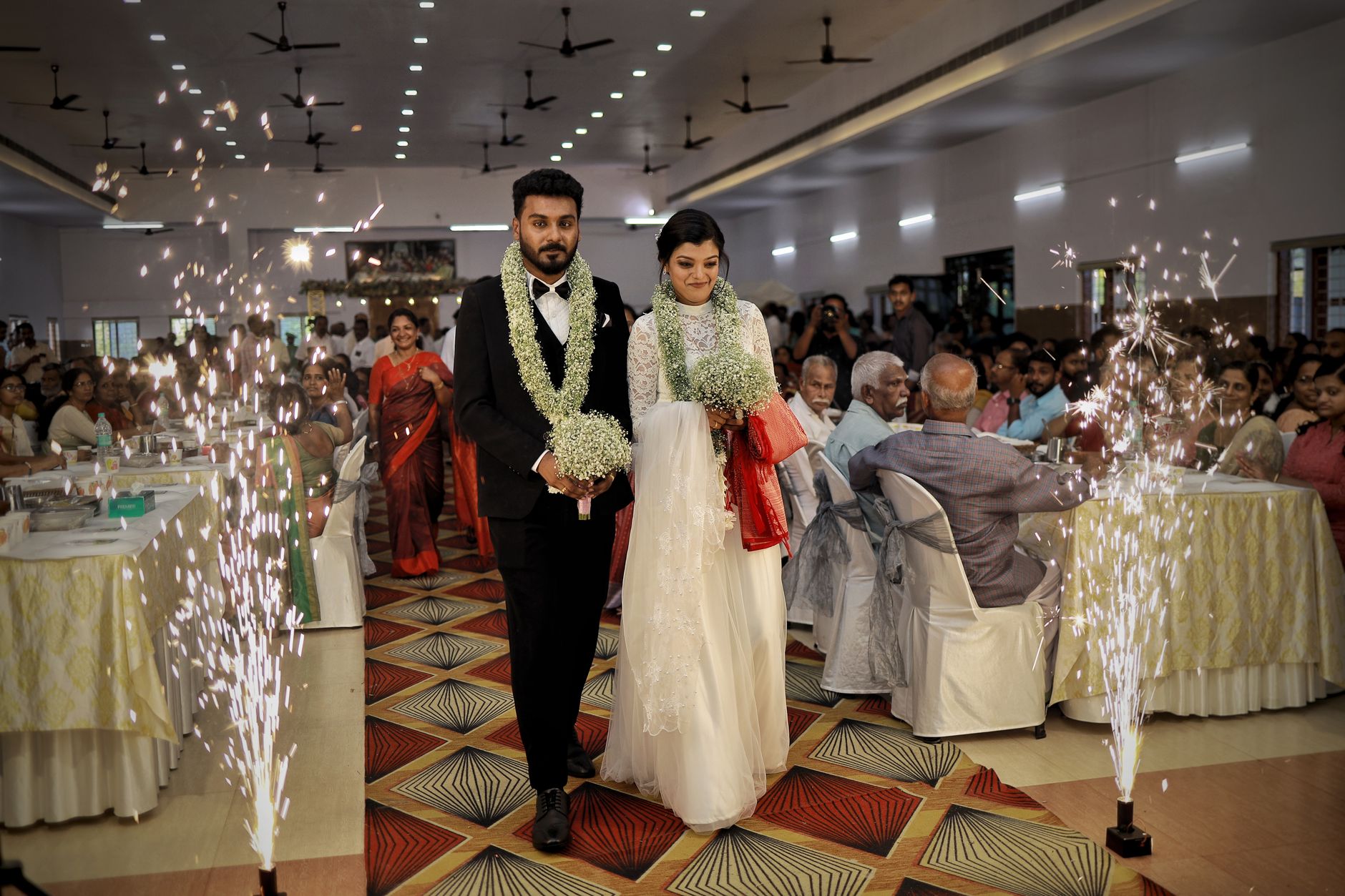
The entrance sets the tone before guests hear the music, meet the couple or find their seats. The most memorable details are not always the grandest: they help people feel oriented, included and genuinely welcomed from the moment they arrive.
A welcome sign that gives guests an immediate sense of place
A welcome sign should answer the first question guests have: “Am I in the right place?” Include both names or a recognisable wedding phrase, and place the sign where it can be read before guests reach the main entrance. Choose a type size that works from several steps away rather than relying on intricate lettering. Keep the wording short enough to scan while walking. If the venue has more than one entrance, add a discreet directional sign or use a simple arrow so late arrivals do not need to interrupt staff or ask another guest for help.
Childhood photos that make the welcome personal
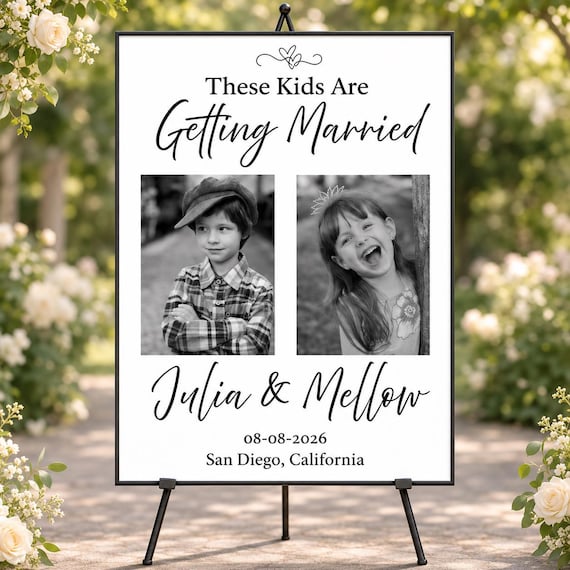
A childhood-photo display gives guests an instant conversation starter, especially when it includes people who knew one partner long before the wedding. Use a small, consistent selection rather than covering every available surface, and label photos only where the connection may not be obvious. A childhood-photo welcome sign such as {{listing:4561549126}} can combine the practical job of greeting guests with a more personal visual detail. Check the final design at full size before printing so faces, names and any editable text remain clear from the path or doorway.
Childhood photos that make the welcome personal
Shop the find ↗A clear plan for where guests should go next
Guests remember whether the first few minutes felt easy. If the ceremony, drinks reception and reception room are in different places, use a small sequence of signs instead of expecting everyone to infer the route from the layout. “Ceremony this way” and “Drinks on the terrace” are usually more useful than decorative wording alone. Walk the route as if you have never visited the venue. Note confusing turns, changes in flooring, low lighting and doors that look like staff entrances. Put signs before the decision point, not after it, and ask someone unfamiliar with the venue to test the route before the wedding day.
A welcome table arranged for quick, natural use
A welcome table works best when guests can understand it at a glance. Group related items together: stationery in one area, cards in another and any keepsakes where people can pick them up without blocking the entrance. Leave enough open space for bags, phones and the inevitable moment when someone pauses to read. Avoid placing every decorative item at eye level. A table that looks attractive in a photograph can become awkward if guests must reach behind tall flowers or move a frame to find the information they need. Keep the most important instruction closest to the side from which guests approach.
A visible card and gift drop-off point
Guests carrying cards or gifts should not have to search for a safe place to leave them. Mark the card box or gift table with simple wording, and position it near the entrance but away from a narrow doorway, stairwell or queue. If gifts are being moved later, assign one named person to check the area at intervals. A secure, stable container matters more than elaborate styling. Avoid placing cards directly on the floor or in a container that can tip when someone adds an envelope. If the venue has security or storage procedures, confirm them in advance so the display is both welcoming and practical.
A seating guide that prevents doorway congestion
If the ceremony has assigned seating, make the arrangement easy to understand before guests reach the rows. A seating chart, escort cards or clearly labelled sections can all work; the right choice depends on the guest list and how quickly people need to be seated. Use names exactly as guests will recognise them, including preferred names where appropriate. Do not place the seating display directly in the narrowest part of the entrance. Guests need room to stop, read and move aside. For a large wedding, sort names alphabetically or by table rather than making people search through a decorative but unstructured arrangement.
A small welcome refreshment for the arrival window
A drink station or simple refreshment can be especially helpful when guests arrive before the ceremony begins. Choose items that can be picked up with one hand, and provide a clear place for empty cups so the entrance does not become dotted with discarded glasses. Consider the season, travel time and whether the venue already supplies water. Keep refreshments separate from delicate paper goods and any fabric that could stain. Label ingredients where relevant, and make sure a non-alcoholic option is just as visible and appealing as alcoholic choices. The aim is to help guests settle in, not create another queue they must navigate.
A guest book station with an easy first instruction
People are more likely to leave a thoughtful message when the guest book station explains what to do. A short prompt such as a favourite memory, a wish for the couple or advice for married life gives guests a starting point without dictating the tone. Place pens that write reliably on the chosen paper and provide more than one. Allow enough elbow room for several guests to write at once, especially if the station is near the entrance. If the book will be displayed in a busy outdoor area, protect it from wind and moisture. Assign someone to check the station during the event so supplies do not quietly run out.
A memory display that includes more than just the couple
Guests remember displays that help them recognise the wider story behind the wedding. Consider photographs of parents, grandparents, siblings, friends or meaningful places, but curate them around a theme so the display feels intentional. A short caption can explain a relationship or moment that would otherwise be missed. Ask family members before using photographs that are particularly personal, and avoid relying on a single person to identify every face on the day. Copies, rather than irreplaceable originals, are safer for an entrance display. Arrange the photos at different heights only if every image remains easy to see.
A discreet schedule for guests who like to know what is happening
A concise timeline can reduce uncertainty without turning the entrance into an information board. Include the broad sequence—ceremony, drinks, meal, speeches and dancing—if guests would benefit from knowing what comes next. Use approximate wording when timings may shift, because an over-precise schedule can create unnecessary concern if the day runs a few minutes late. Place the schedule where guests can read it while waiting, not where it blocks the welcome sign or seating information. If children, older guests or anyone with mobility concerns may need to plan ahead, include practical notes such as the location of toilets or lifts when the venue layout makes those details useful.
An entrance soundtrack that feels considered
Music begins shaping the atmosphere before many guests see the couple. Choose an arrival playlist that suits the venue, time of day and audience, and keep the volume low enough for people to greet one another and hear directions. A short test at the actual entrance can reveal echoes or dead spots that are not obvious indoors. Nominate someone to manage the music rather than leaving a phone unattended on a table. Download the playlist if the venue’s connection is unreliable, check the power arrangement and agree on what should happen if the ceremony starts early or guests arrive later than expected.
A thoughtful accessibility check at the doorway
An entrance feels welcoming only when everyone can use it comfortably. Check the route for steps, loose mats, narrow gaps, low lighting and furniture that reduces turning space. If there is an alternative accessible route, mark it clearly and make sure it is genuinely convenient rather than sending guests around the building alone. Ask the venue about seating near the entrance, accessible toilets and assistance procedures. Do not assume that a ramp or lift is available simply because the venue describes itself as accessible. Share practical information with guests who may need it before the wedding so they can arrive with confidence.
Weather protection that does not look like an afterthought
Outdoor entrances need a plan for sun, rain, wind and sudden temperature changes. Protect paper signs with suitable covers or indoor placement, weigh down lightweight décor and avoid unsecured items that could blow into pathways. On a hot day, shade and water may be more appreciated than additional decoration. Have a clear fallback rather than waiting for the forecast to become certain. Decide which pieces can move indoors, who will move them and where they will go. Test umbrellas, blankets or fans before guests arrive, and keep their storage tidy so practical supplies do not make the entrance look cluttered.
A clearly marked coat, bag or umbrella area
Guests notice when there is nowhere sensible to put the things they carried in. If the venue provides a cloakroom, use a simple sign and confirm whether it is staffed. If not, create a designated area that does not interfere with circulation, emergency routes or decorative displays. Think about collection as well as drop-off. A crowded, unnamed rack can become difficult to manage at the end of the night, particularly when several coats look alike. Numbered tags or a supervised collection point may be more useful than a beautifully styled but unstructured coat area.
A family or cultural welcome detail with context
A small tradition can make the entrance feel distinctive when guests understand its meaning. This might be a greeting in a family language, a symbolic object, a customary refreshment or a short explanation of a ceremony-related tradition. Context helps guests participate respectfully instead of wondering whether they are allowed to touch, taste or join in. Keep explanations warm and concise, and ask family members to check the wording where the tradition is culturally specific. Avoid presenting something as a prop if it carries real significance. The most effective displays invite curiosity without requiring guests to read a long paragraph before moving inside.
A photo moment that does not obstruct the entrance
An arrival photo spot can encourage guests to interact, but it should not force everyone through the same narrow area. Place it to one side of the main route and provide enough space for a small group to stand without blocking people who are entering, finding seats or using an accessible path. Choose a background that works in the actual light, not only in a carefully edited inspiration image. Tell guests whether they should use their own phones or whether someone will take photographs. If the couple prefers an unplugged ceremony, make the expectation clear before guests reach the ceremony space.
A calm place for late arrivals and quiet breaks
Some guests will arrive early, late, overwhelmed or in need of a few quiet minutes. If the venue allows it, identify a nearby low-traffic area with seating where someone can pause without feeling in the way. This is particularly useful for older guests, families with young children and anyone who finds crowded entrances tiring. Tell the coordinator or ushers about the space so they can guide people discreetly. Do not place it beside speakers, catering equipment or a door that is constantly opening. A comfortable chair, clear route and a little privacy can make more difference than another layer of decorative detail.
A final practical sign guests will thank you for
One well-placed practical sign can prevent repeated questions throughout the day. Depending on the venue, it might point to toilets, the ceremony room, the bar, the outdoor area or a baby-changing space. Use familiar words and arrows rather than relying on a decorative symbol that guests may not understand. Walk through the space at guest eye level and check that the sign is not hidden behind flowers, glare or an open door. Signs should support the venue’s existing wayfinding rather than compete with it. Remove temporary instructions once they are no longer useful, especially if the same area changes function later.
A welcome message that sounds like the couple
The final detail guests remember may be a few sincere words. A short message can thank them for travelling, acknowledge the people who helped or invite them to relax and enjoy the day. Write it in the couple’s natural voice; a plain sentence that feels true is stronger than a formal phrase copied from a template. Place the message where guests have a moment to read it, such as beside the welcome table or guest book, rather than hiding it among competing signs. Proofread names, punctuation and dates, then ask someone who knows both partners to check that the tone feels warm and accurate before printing.


