A sweetheart table is small, but it sits in a highly visible spot throughout the reception. The details guests remember are rarely the most expensive ones; they are the choices that make the table feel intentional, comfortable, and connected to your story. Use this list to plan a beautiful setup that photographs well, works in the room, and still leaves enough space for you to eat, talk, and enjoy the evening.
A sign guests can read from a distance
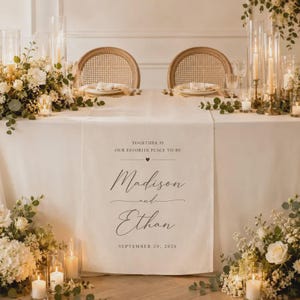
A clear sign gives the sweetheart table an immediate focal point and helps distinguish it from nearby guest tables. Choose wording that suits your celebration, such as your names, a shared surname, or a simple phrase like “just married,” then check that the lettering is large enough to read in the reception lighting. Position the sign where it will not be hidden by florals, candles, or your chairs. Before the wedding, take a quick phone photo from the far side of the room; if the words disappear in the image, increase the contrast, simplify the design, or move the sign higher.
A sign guests can read from a distance
Shop the find ↗A personalized runner that anchors the table
A runner can make a small sweetheart table feel finished without covering the entire surface. Select a material and colour that relate to your wider reception styling, then place the personalised wording where it will remain visible after plates, glasses, and flowers are added. The {{listing:4518424918}} combines a custom sweetheart-table sign with a personalised table runner, which can help create one connected focal point rather than several unrelated decorations. Allow enough clear space for your dinnerware and confirm the table dimensions before ordering so the runner does not bunch at the ends.
A backdrop with a deliberate shape
The area behind your chairs often appears in portraits, speeches, and guest photos, so treat it as part of the table design rather than an empty wall. A floral arrangement, fabric drape, greenery installation, wooden panel, or arch can frame the couple without competing with the rest of the room. Match the backdrop’s width to the table and chairs. A narrow design can look lost behind a broad table, while an oversized installation may make the couple feel crowded. Keep sightlines in mind as well: guests should still be able to see you during speeches and across the dance floor.
Lighting that flatters rather than glares
Warm, low-level lighting makes a sweetheart table feel inviting and gives photographers more options after sunset. Small LED candles, votives in glass holders, or carefully placed string lights can add depth without producing harsh reflections on signage or glassware. Avoid placing bright lights directly in front of your faces or behind transparent signage, where they can create glare. If the venue allows candles, ask about flame restrictions before buying them. Test the setup in a dim room and photograph it from several angles to see whether the light creates shadows under your eyes or washes out the table details.
Flowers arranged below eye level
Flowers bring colour and softness to the table, but a sweetheart arrangement should not block conversation. Low bud vases, a compact centrepiece, or a floral garland that stays close to the tabletop usually works better than a tall design placed between you and your guests. Ask your florist to consider the table’s depth, your chair height, and the location of the cake or microphone. If you want a fuller look, use several small arrangements rather than one tall mass. This also makes it easier to move a vase when dinner arrives and gives you a practical backup if one arrangement is disturbed.
A menu and place setting that feel special
Because the sweetheart table is yours alone, your place settings can include details that would be impractical for every guest. A printed menu, a handwritten note, a distinctive napkin fold, or a small name card can make the meal feel like a pause designed for the two of you. Keep the arrangement functional. Leave room for water glasses, cutlery, and any plates that will arrive during the meal, and decide where used napkins will go between courses. A beautifully styled place setting becomes frustrating if it forces you to balance a plate on your lap or move three decorations before taking a sip.
A chair plan that makes the table welcoming
Many couples focus on the table surface and forget that the chairs are part of the visible composition. Decide whether you want two matching chairs, a bench, or seats with simple signage, then check that the arrangement gives you enough space to sit down and stand up comfortably in formal clothing. Do not attach delicate decorations where they can catch on sleeves, veils, or suit jackets. If you use chair signs, secure them with a method approved by the venue and avoid anything that can scratch rental furniture. Leave a clear route behind the chairs so your photographer and servers can move safely.
A small nod to your shared story
One personal object can make the table feel like yours without turning it into a display shelf. Consider a framed photograph from a meaningful trip, a copy of a favourite book, a small inherited item, or a paper detail connected to where you met. The best choice is something guests can understand quickly and that you genuinely want near you. Use one or two items rather than several unrelated souvenirs. A crowded surface can look untidy in photos and may make it difficult for staff to clear plates. If the object is valuable or fragile, ask a trusted person to collect it after the reception rather than leaving responsibility to the venue team.
A colour connection to the rest of the reception
The sweetheart table should stand out, but it should not look as if it belongs to a different wedding. Repeat one or two elements from the guest tables, such as the napkin colour, floral variety, ribbon, candle style, or metallic accent, then give the couple’s table one additional personalised feature. A useful way to check balance is to photograph the table beside the nearest guest tables. Look for a visual bridge between them. If the sweetheart table is much brighter, darker, or more ornate, reduce the number of competing colours before adding more decoration.
A tabletop with enough breathing room
Negative space is a detail guests may not name, but it makes the entire arrangement look more polished. Keep the centre area open enough for plates and conversation, and group decorations in a few purposeful zones instead of scattering small objects across every inch of fabric. Start by placing the items you must have: dinnerware, glasses, menus, and any venue-provided equipment. Add the sign, flowers, and candles around those essentials. This order prevents a common mistake—creating a beautiful decorative layout first and then discovering that there is nowhere practical to put the meal.
A backdrop or sign with good photo contrast
Details that look attractive in person can disappear in photographs if their colours are too similar. Dark lettering on a light background, light lettering on a darker surface, and matte finishes are usually easier to capture than glossy materials under direct flash or uplighting. Ask your photographer whether they have seen the reception space before, or send a photo of the planned setup. Consider how the sign will look in both wide room shots and close portraits. A design that reads beautifully up close may need simpler wording or larger letters to remain legible when the whole table is visible.
A practical place for cards and small gifts
Guests may leave cards, notes, or small gifts near the couple’s table, especially if there is no separate card box. Plan for this before the reception by choosing a discreet basket, box, or side table that does not compete with the main display. Tell the coordinator or a trusted helper what should happen to these items at the end of the evening. Assigning one person to move them to a secure location prevents cards from being left on the floor, mixed with rental decor, or forgotten during a late-night departure. The collection point should be easy for guests to identify but not obstruct the couple’s seating area.
A detail guests can interact with respectfully
If you want the table to invite participation, choose an interaction that is simple and clearly explained. A small card asking guests to write marriage advice, a prompt for favourite memories, or a request for song suggestions can create a keepsake without requiring guests to interrupt your dinner. Place instructions and pens where they are visible, but do not put them directly in front of your plates. If the activity needs a larger collection point, use a nearby table rather than overloading the sweetheart table. Keep the prompt specific; “leave us a note for our first anniversary” usually produces more meaningful responses than a vague request for comments.
A table number alternative that fits the setting
Even when the table is reserved for the couple, a small identifier can help the photographer, coordinator, and guests understand the layout. Instead of using a standard number, you could incorporate your names, wedding date, or a short phrase that matches the reception stationery. Make sure the wording does not compete with the main sign. If both pieces contain your names, reduce repetition by giving each a different purpose—for example, use one as the table’s identifying feature and the other as a decorative phrase. Consistent typography will make separate signs look intentionally coordinated.
A linen choice that suits the table shape
The right linen can make an ordinary rental table look considered, but the table shape matters. A round table, sweetheart-length table, and narrow rectangular table each need different coverage, and a runner that is too short or too wide may look accidental rather than relaxed. Ask the venue for exact table measurements, including the height and whether a cloth is already supplied. If using a runner over a full tablecloth, check that the colours have enough contrast to show the pattern or wording. Steam or press fabric before setting it out, and pack clips or approved fasteners if the venue is drafty.
A quiet comfort detail for the couple
The table should support the evening, not only decorate it. Place a small water bottle out of sight, provide a discreet place for tissues, and ask the caterer where finished plates will go. If your outfit has limited pockets, arrange a nearby spot for lipstick, medication, or other essentials. These practical items do not need to appear in photographs. A coordinator can remove them temporarily for portraits and return them before dinner. Planning this in advance is especially helpful if you have a long train, fitted formalwear, or a hairstyle that makes frequent trips away from the table inconvenient.
A personalised detail that becomes a keepsake
Choose one element you can preserve after the wedding, such as a sign, printed menu, date card, fabric runner, or handwritten note. A keepsake has more value when it connects to the day’s actual setting rather than being a generic decoration purchased only to fill space. Before the wedding, decide how the item will be stored. Fabric should be kept clean and completely dry, while paper goods benefit from a flat, acid-free folder or protective sleeve. If a personalised piece will be packed after the reception, tell your helper exactly where it belongs so it does not disappear among disposable decor.
A setup plan your venue can follow
The most attractive design can still fail if nobody knows where each piece belongs. Create a simple setup photo or diagram showing the table direction, sign position, chair placement, floral locations, and any items that should remain off the table until later. Put all sweetheart-table pieces in one labelled container and include a short checklist. Confirm who will set it up, who will move cards or gifts, and who will collect the keepsakes. This avoids last-minute decisions by busy staff and gives you confidence that the details you chose will appear as planned.
A final edit before guests arrive
Before the room opens, stand several steps away and inspect the table as a guest would. Check that the sign is readable, the chairs are aligned, the flowers do not block faces, the lighting is comfortable, and the personalised details are facing the correct direction. Then remove anything that feels unnecessary. A table usually looks more memorable when its main idea is easy to understand: perhaps your names, a beautiful runner, warm light, and one personal object. Give the final approval to your coordinator or photographer, then stop adjusting it and enjoy the celebration.