A wedding program should do more than list the processional. It should answer the small questions guests may hesitate to ask, from where to go and when to silence their phones to what a reading means and how to reach the reception. The key is to group related information, use plain language, and give each detail a clear visual priority so one compact program remains useful rather than crowded.
Start with the couple, ceremony and essential identity details
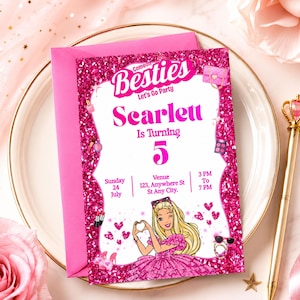
Include details 1–4: the couple’s names, the wedding date, the ceremony title or type, and the venue name. These establish exactly what the program belongs to and are especially helpful when several wedding events are happening across the same weekend. Use the names and date consistently with the invitation, welcome sign and seating materials so guests do not have to reconcile different spellings or formats. The venue name should be specific enough to distinguish a ceremony space from a reception space, particularly at a hotel, estate or venue with several rooms. If the ceremony has a meaningful designation, such as a family ceremony, civil ceremony or vow renewal, include it only if it genuinely helps guests understand the occasion. Keep decorative wording subordinate to the facts; an ornate heading should never make the names or date difficult to find. A practical design test is to cover the rest of the page and ask whether someone could identify the event from the top section alone. Avoid treating the program like a general party invitation: birthday formats such as {{listing:4438257288}} are built for a different kind of event, so a wedding program should prioritise ceremony navigation and guest context rather than invitation-style party messaging.
Start with the couple, ceremony and essential identity details
Shop the find ↗Give guests the date, start time and location information they actually need
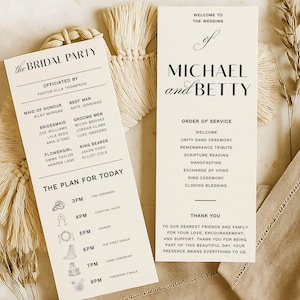
Include details 5–8: the guest arrival time, the ceremony start time, the exact ceremony location, and any separate reception location. A start time tells guests when the ceremony begins, but an arrival time sets a more useful expectation for parking, finding a seat and settling before the processional. If the invitation already gives the arrival time, repeating it in the program can still help guests who picked up the program after entering the venue. Do not assume that a venue name alone solves the location problem. Add a room, chapel, lawn or other specific area when relevant, then state whether the reception is elsewhere. If guests must walk between spaces, mention that briefly and include the most important direction, such as an entrance or path to use. Avoid packing the program with a full map if a separate sign or digital map does the job better. When space is limited, use a compact information block with labels such as Ceremony, Reception, Guests arrive and Date. This is clearer than placing facts in a decorative paragraph. A simple editable wedding program layout, such as {{listing:4312464279}}, can help keep these logistical details aligned without requiring multiple separate cards.
Give guests the date, start time and location information they actually need
Shop the find ↗Explain arrival, access and seating expectations before the ceremony begins
Include details 9–11: the recommended arrival route, the seating arrangement, and any access information guests may need. State whether seating is open, assigned by side, or directed by an usher. If there is no traditional side for each family, saying so can prevent guests from clustering in one area and leaving awkward gaps elsewhere. Arrival guidance should cover the most likely points of friction rather than every possible scenario. Mention a particular entrance, a shuttle drop-off point, a lift, accessible parking or a longer outdoor route when those details matter for your venue. If guests should remain standing until invited to sit, or if the front rows are reserved for family, say so directly and kindly. Keep access wording practical and discreet. For example, a short note about step-free entry is more useful than a broad statement that everyone is welcome. If you have a venue contact or accessibility point person, provide their details in a separate communication rather than forcing a long phone number into the ceremony sequence.
Show the order of ceremony without turning it into a script
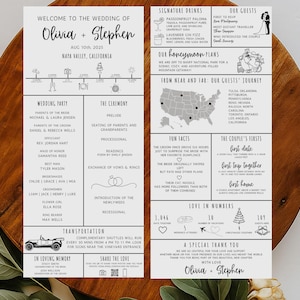
Include details 12–15: the processional, opening words, readings or reflections, and the recessional. Guests do not need every spoken sentence, but they do benefit from knowing what each stage is called and when a transition is taking place. A clear sequence also helps people follow along when the ceremony includes unfamiliar customs or several changes in position. Use short labels such as Processional, Welcome, Reading, Vows, Ring exchange, Pronouncement and Recessional, selecting only the parts that apply. If the ceremony is very short, a simple list may be enough; if it includes several readings, rituals or musical moments, group them under descriptive headings rather than creating a dense line-by-line transcript. A common mistake is to use wording that sounds elegant but is too vague to navigate, such as A moment of togetherness. Keep the expressive language for a short introduction or closing note, and make the actual order scannable. An infographic-style format such as {{listing:4312471589}} can be a useful reference for thinking about hierarchy, even when you adapt the content to your own ceremony.
Show the order of ceremony without turning it into a script
Shop the find ↗Name the people involved and explain their roles
Include details 16–18: the wedding party, the officiant, and anyone with a meaningful ceremony role. Depending on the event, this may include attendants, parents, grandparents, flower children, ring bearers, readers, musicians or a person leading a cultural ritual. Listing names helps guests identify people they may hear mentioned or see standing at the front. Use role descriptions that reflect the couple’s preferences rather than relying on assumptions. You might choose attendants instead of bridesmaids and groomsmen, or list a sibling by name without assigning a traditional title. If someone is participating in more than one way, keep the description concise rather than repeating their name in several sections. Check every spelling, accent mark and preferred name with the people involved. This is one of the easiest program errors to prevent and one of the most visible to the people named. If the list is long, arrange names by role or ceremony order, and consider moving extended acknowledgements to a separate wedding website.
Identify readings, music and moments guests may want to recognise
Include details 19–21: the titles and authors of readings, the names of musical pieces or performers, and any important silent or participatory moment. These details give guests a way to understand what they are hearing and to recognise the contribution of a friend, relative, choir, instrumentalist or recorded artist. For a reading, list the title and author or source where appropriate, followed by the reader’s name. For music, include the piece and performer only if you have confirmed the final choice; last-minute substitutions are common, so leave enough time for a final proof. If guests will be invited to stand, sing, respond or observe a moment of silence, use a direct instruction rather than expecting them to infer it from the sequence. Avoid reproducing full copyrighted lyrics or long reading excerpts simply to fill space. A title, source and short context note usually provide enough information. If a particular piece has a story behind it, add one sentence about why it was chosen only when that explanation improves the guest experience rather than interrupting the flow.
Give context for cultural, religious and family traditions
Include details 22–25: the name of each cultural or religious tradition, a short explanation of what guests will see, any guest response, and the pronunciation of unfamiliar names or terms when helpful. A brief explanation can turn an unfamiliar action into a welcoming shared moment, particularly when many guests are encountering the tradition for the first time. Write for a guest who knows nothing about the custom, but do not turn the program into a textbook. One or two sentences can explain that a ritual symbolises joining families, honouring ancestors, exchanging blessings or making a promise. If the practice has a specific sequence, list the action and the meaning separately so the practical instruction remains easy to locate. Be precise and ask the people leading the ceremony to review the wording. Traditions can vary between families, communities and denominations, and a generic explanation may accidentally oversimplify them. Avoid presenting one version as universal when your ceremony is using a particular family interpretation.
Handle accessibility, children, phones and photography with considerate wording
Include details 26–28: the phone policy, the photography or recording policy, and any note about children or accessibility. Guests should know whether the ceremony is unplugged, whether they may take photographs from their seats, and whether a professional photographer will capture the ceremony. Put this information near the front or in a clearly labelled note so it is seen before the processional. Make requests specific and explain the reason when that encourages cooperation. For example, asking guests to keep phones away during the ceremony protects the couple’s attention and keeps the photographer’s view clear. If photography is allowed at a particular moment, state when and from where. A note about children should be welcoming rather than defensive, and it should point guests to the relevant childcare or quiet-space information if one exists. Accessibility details deserve the same prominence as etiquette reminders. Mention step-free seating, captioning, hearing assistance or a quiet area when available, and make clear whom guests can approach for help. Do not imply that a guest must disclose a need publicly; a discreet contact route is more respectful.
Connect the ceremony to the reception and practical next steps
Include details 29–31: how guests move to the reception, what happens immediately after the ceremony, and where to find essential event information. This might include a receiving line, confetti moment, group photographs, drinks reception, shuttle departure or a short pause while the room is prepared. Guests are less likely to miss an important transition when the program explains the order plainly. If the reception is at another location, state the transport method, departure point and approximate timing only when those details are confirmed. Do not print a specific shuttle time that may change unless someone is responsible for updating guests. For a walk between spaces, mention the route’s key feature, such as an outdoor path or stairs, and provide an alternative where relevant. A small timeline can work well here, but avoid duplicating the entire reception menu or seating plan. The ceremony program should answer what happens next, while signs, place cards and the reception stationery handle the rest. If your page needs a visual overview, an editable design described as a wedding itinerary or infographic, such as {{listing:4312471589}}, can inspire a compact timeline structure without adding unnecessary prose.
Finish with acknowledgements, contact information and a readable keepsake layout
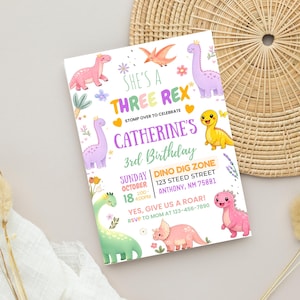
Include details 32–33: a short thank-you message and the most useful contact or digital information. The thank-you can recognise guests for travelling, supporting the couple or joining the celebration, but keep it brief enough that it does not compete with the ceremony order. A QR code may point to the wedding website, full weekend schedule, accessibility information or photo-sharing instructions, provided the destination is tested before printing. Decide what belongs in the single program by asking whether a detail helps guests understand, participate in or move through the ceremony. Remove duplicate venue information, long biographies and decorative quotations that do not serve one of those purposes. If you need more room, shorten sentences and combine related facts before reducing type size; tiny text makes a beautiful program frustrating to use. Before sending the file to print, proof it in the way guests will see it. Print one copy at its final size, check the contrast in ordinary indoor light, confirm folds and margins, and have someone unfamiliar with the plans find the ceremony start time, seating guidance and next step. A minimalist editable format such as {{listing:4312464279}} can support a clean one-program structure, while the bright, child-focused design language of {{listing:4453502445}} is a useful reminder that visual style should match the audience and occasion rather than simply look decorative.
Finish with acknowledgements, contact information and a readable keepsake layout
Shop the find ↗