
The details guests remember are rarely the most expensive ones; they are the choices that make the day easier to follow, more comfortable to attend and more personal to the couple. Use this list of 33 guest-facing details to find small improvements that fit your venue, schedule and budget, rather than trying to perfect everything at once.
A ceremony timeline guests can understand
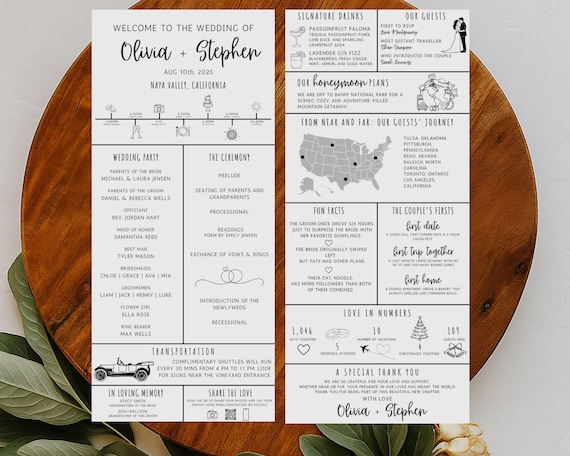
The first three details guests notice are the start time (1), whether the ceremony actually begins when promised (2) and how clearly the order of events is explained (3). Put the arrival time and ceremony time in the invitation, then repeat them on the wedding website or final message. If guests are expected to travel between locations, distinguish the time they should arrive from the time the vows begin. A simple order-of-service card can prevent guests from wondering whether a reading, musical piece or signing is still to come. The Minimalist Wedding Ceremony Program Template can be adapted into an easy-to-scan timeline, but keep the finished version readable in the available print size. Avoid cramming in every thank-you message; the ceremony flow, names and practical information matter most.
A ceremony timeline guests can understand
Shop the find ↗A welcome that reduces uncertainty
Guests quickly notice whether they know where to go after arriving (4), where to leave cards or gifts (5) and whether someone is available to answer questions (6). A small welcome table, a visible sign and one named member of the wedding party can solve all three problems without making the entrance feel like a reception desk. Place directions where people make decisions, such as a fork in the path or the entrance to a second building. Do not assume everyone has read the full invitation. Older relatives, plus-ones and guests arriving from another event may need a quick verbal welcome. If the venue has several entrances, accessible routes or separate ceremony and reception spaces, make the route obvious rather than relying on discreet decorative signs that are easy to miss.
Seating that balances tradition and comfort
Seating affects the experience from the first minute, so guests notice whether they can find their place (7), whether the arrangement feels thoughtful (8) and whether they can see the ceremony (9). Decide early whether you need assigned seats, assigned tables or open seating. Assigned tables usually offer structure without requiring the couple to manage every individual chair, while assigned seats may be worthwhile for a formal meal or a carefully planned family arrangement. Check sightlines from the back and sides of the room, not only from the aisle. Keep tall arrangements, signage and standing photographers from blocking the view, and leave enough space for guests using mobility aids, parents with children or anyone who needs an easier route. A beautiful layout that makes people twist around, stand in the doorway or move during the vows is not serving the event.
Seating comfort beyond the chairs
The physical basics are details 10 through 12: a chair that is comfortable enough for the ceremony, a sensible temperature and protection from awkward weather. If guests will sit outdoors, tell them in advance and plan for shade, wind or a cooler evening. If you provide fans, blankets or umbrellas, place them where people can take one without interrupting the ceremony rather than handing them out at the last second. Walk through the venue at the same time of day as the event if possible. Afternoon sun may shine directly into one side of the ceremony, while a covered space may become chilly after sunset. Ask the venue about ventilation, heating and backup arrangements, then communicate only what guests need to know. Practical preparation is more useful than a sign telling people to endure an uncomfortable setup.
Sound that lets every guest participate
Guests notice sound quality through details 13, 14 and 15: whether they can hear the vows, whether readings are understandable and whether music supports rather than overwhelms the moment. Test microphones from the furthest seat, including during a real reading rather than only a spoken sound check. A microphone that works for the celebrant may still be poorly positioned for a quiet reader or a couple speaking softly. Ask the musician, DJ or venue technician who is responsible for adjusting volume during transitions. Keep a short printed or digital running order so the person managing sound knows when processional music, readings and announcements occur. If the ceremony is outdoors, test for wind noise and nearby traffic at the actual time. Good sound allows guests to feel included even when they are seated far from the front.
Food service that respects the guest’s evening
Food creates several noticeable moments: guests notice whether dietary needs were collected clearly (16), whether the meal arrives at a reasonable pace (17) and whether portions and service match the format promised (18). Put dietary questions on the RSVP rather than asking guests to send a private message later, and give the caterer a final list with names and table numbers. Label alternatives discreetly so guests and servers do not have to guess. Build the meal around the event’s rhythm. A long gap between ceremony and food can feel tiring, especially if guests have nowhere comfortable to sit, while a buffet needs enough serving space to avoid a queue blocking the room. Confirm what happens if a guest misses their table’s call, whether children receive suitable portions and how late-evening food will be offered. Clear information prevents embarrassment for everyone.
Drinks and water that are easy to find
Guests often notice three drink details immediately: accessible water (19), a queue that moves efficiently (20) and options beyond the signature alcoholic drink (21). Put water in more than one obvious location, especially if guests will move between an outdoor ceremony, drinks reception and dining room. If the bar is far from the main gathering area, consider a second water station rather than making people cross the venue for a basic need. A limited drinks menu can work well when it is explained clearly and includes appealing non-alcoholic choices. Do not hide soft drinks or alcohol-free options at the back of the bar. Make sure guests know whether drinks are hosted, limited to certain courses or available for purchase, using warm and straightforward wording. This avoids awkward questions and helps guests pace themselves comfortably.
A schedule that feels generous, not confusing
The running order is felt through details 22, 23 and 24: whether transitions happen without unexplained gaps, whether speeches are paced well and whether guests know what is happening next. Leave realistic time for photographs, room changes and people finding their seats; a schedule that works only when everyone moves instantly will slip. Give suppliers and key members of the wedding party the same current version so instructions do not conflict. Speeches are easier for guests when the host introduces each speaker, checks that the microphone is ready and explains any change to the plan. If a long photo session is unavoidable, offer a clear place to wait and something practical, such as drinks or light refreshments. Guests do not need a minute-by-minute itinerary, but they do appreciate enough signposting to relax rather than repeatedly ask what comes next.
Personal details that feel specific to you
Personalisation is most effective when it appears in details 25, 26 and 27: a meaningful choice of music, a short story in the ceremony or a display that connects to your shared life. Choose a few details with a real reason behind them instead of adding names and dates to every available surface. A small collection of photographs, a favourite reading or a menu note explaining a family recipe can give guests something genuine to discover. The groom’s clothing can carry that same sense of identity without changing the whole wedding aesthetic. A custom jacket with a photo, logo or text can work as a distinctive reception layer when the design is legible, the fit is checked early and the print has been approved carefully. The Personalized Wedding Suit Jacket for Men is one option to consider for that purpose; allow time to review measurements and artwork before the wedding date.

Personal details that feel specific to you
Shop the find ↗Reception details that help people connect
The final six details are small but highly visible: table numbers that are easy to read (28), menus or food information where guests can see them (29), lighting that supports conversation (30), a dance floor with enough usable space (31), a thoughtful plan for children or older guests (32) and a clear way to leave safely at the end (33). Check signs from a seated guest’s eye level; elegant low-contrast lettering can disappear in a dim room. Think through the final hour as carefully as the first. Tell guests how to find coats, transport or collection points, and make sure pathways remain lit and unobstructed. For children, simple activities near their table may help, but do not place anything noisy beside guests who need a quieter setting. The best reception details quietly remove friction, leaving people free to talk, dance and remember the celebration.


