
An old-money wedding atmosphere is less about lavish spending than restraint, consistency and details that feel considered rather than themed. Use this list to shape the guest experience from arrival to the final course: choose a few enduring materials, edit the colour palette and prioritise comfort, beautiful service and personal meaning over decoration for its own sake.
1–3. Establish a restrained visual language
Start with three decisions: a quiet colour palette, a short materials list and one architectural or historical reference. Ivory, soft white, moss, navy, tobacco, stone or muted blue can create a more timeless foundation than a large collection of bright colours. Choose two or three primary tones, then allow natural wood, brass, linen or greenery to add variation without making every element compete for attention. Next, decide which materials will repeat across the reception. For example, a warm white table linen, aged-brass accents and printed paper with generous margins will feel more cohesive than unrelated metallics, acrylic signage and several types of patterned décor. A useful test is to remove anything that exists only to announce the theme. If a detail does not improve the meal, guide guests, frame a meaningful moment or add tactile beauty, it may not need to be there.
4–7. Make the table feel collected, not decorated
Build each table from practical layers: a well-pressed cloth or bare wooden surface, a simple place setting, a low floral arrangement, useful glassware and one personal paper detail. The goal is a table guests can comfortably eat across, not a centrepiece that becomes an obstacle. Keep arrangements low enough for conversation, and check sightlines from a seated position before finalising the design. Introduce variation through texture rather than novelty. A folded linen napkin, a small menu, a discreet place card and a mix of polished and natural surfaces can make a table feel established and welcoming. Avoid covering every inch of the table: negative space gives the eye somewhere to rest and makes the pieces you have selected appear more intentional. If the venue already has strong flooring, panelling or architectural details, let those features do some of the visual work.
8–10. Use stationery as part of the room
Reception stationery should look like a family of pieces, not a series of one-off announcements. Repeat one typeface, one ink colour and one paper tone across the welcome sign, seating chart, menus, place cards and bar information. A classic serif paired with a restrained script can work well, but readability matters more than decorative lettering, particularly for older guests and dimly lit rooms. A menu is also a small piece of hospitality: it tells guests what is being served and gives the meal a sense of occasion. An editable design such as {{listing:4429725847}} can help you coordinate a vintage-inspired dinner menu and place cards while keeping names, courses and dietary notes accurate. Proof every line, including accents, guest names and allergen information, and print one sample at the actual size before ordering or producing the full set.
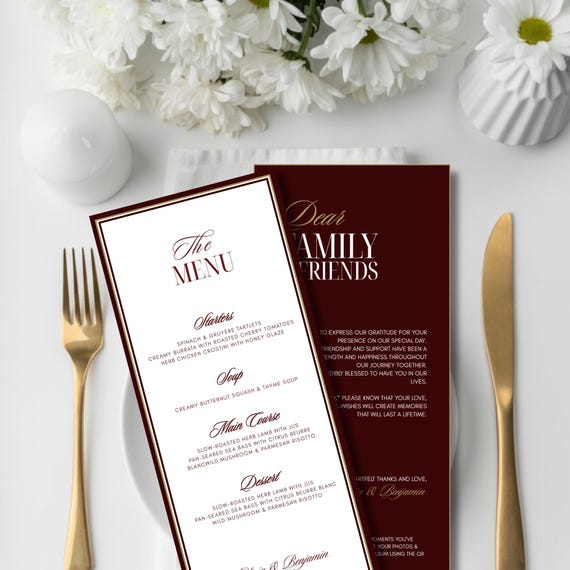
8–10. Use stationery as part of the room
Shop the find ↗11–14. Let lighting do the evening’s work
Plan lighting in layers rather than relying on one bright ceiling source. Ambient light establishes the room’s overall warmth, table-level light helps guests see one another and the menu, and a small amount of directional light can draw attention to the dance floor, cake or speeches. Candles, shaded lamps, wall lights and dimmable fixtures generally create a softer impression than exposed, cool-white bulbs. Practical testing is essential. Place a sample table in the room after sunset and look at it from the entrance, the head table and a guest seat. Check whether faces are visible in photographs, whether menus can be read and whether flames are safe around sleeves, florals and children. Avoid placing tall candles or heavy arrangements where they block sightlines; intimacy comes from seeing the people around you, not simply from lowering the light.
15–17. Choose florals with season and proportion in mind
For a timeless reception, focus on shape, scale and restraint rather than trying to make every flower look rare. A small number of varieties repeated throughout the room can feel more deliberate than a crowded mixture. Use foliage, branches, herbs or seasonal blooms where they suit the venue, and allow some stems to move naturally instead of forcing every arrangement into a perfectly round form. Proportion is the detail most often missed. A large floral installation may be appropriate over a fireplace or behind a couple’s table, but it can overwhelm a narrow table or low-ceilinged room. Ask your florist for a height plan, then consider the guest’s experience: can someone across the table see clearly, can a server move safely and will flowers shed pollen or scent near food? Remove heavily scented blooms if they could compete with dinner.
18–20. Treat the entrance as the first chapter
Give guests an immediate sense of what to do by combining welcome, direction and atmosphere at the entrance. A simple welcome message, a clearly marked seating chart and a visible place to leave cards can prevent the first few minutes from becoming confusing. Place these elements where arriving guests naturally pause, rather than hiding them behind a floral display or placing them in a narrow passage. The entrance should also reflect the reception without displaying every design idea at once. Use the same paper tone, typography and colour accents that appear at the tables. If guests are moving from ceremony to reception, include one concise instruction about timing, seating or the bar. Elegant wording is useful only when it is easy to scan, so keep the most important information large enough to read in low light and from a short distance.
21–23. Make service feel quietly generous
An old-money atmosphere is strongly influenced by how guests are looked after. Offer water as soon as people are seated, make the bar easy to find and ensure there is somewhere comfortable for guests who do not want to dance. A clear service plan also prevents visible delays: confirm when courses are cleared, where dietary meals are identified and how speeches will be announced without interrupting conversation unnecessarily. Ask the caterer to describe the guest journey from arrival through dessert. This can reveal small improvements, such as placing passed drinks away from the doorway, adding a non-alcoholic option that feels equally considered or serving coffee where it will not create a queue beside the dance floor. Avoid overcomplicating the menu with too many choices unless the team can deliver them smoothly. Calm, attentive service will always feel more refined than elaborate service that leaves guests waiting.
24–26. Build a menu around comfort and clarity
A sophisticated meal does not need to be difficult to understand. Choose dishes that suit the season, the venue and the length of the reception, then make the sequence feel intentional. A welcome bite, a balanced dinner and a well-timed dessert or late-night offering can be more memorable than a long menu that keeps guests seated for too many hours. Consider temperature, texture and portion size, especially if the reception includes dancing or outdoor movement. Ask for dietary alternatives early and present them with the same care as the main menu. A discreet note on the RSVP can help the catering team prepare accurately, while place cards or a seating plan can identify meals without making guests explain their needs publicly. When writing the printed menu, use plain descriptions alongside any formal dish names. This helps everyone understand what they are receiving and reduces last-minute questions for the service team.
27–30. Add personal history without creating clutter
Personal details feel most elegant when they are selective. Choose three or four ways to reference your story: family photographs in simple frames, a meaningful song during dinner, a recipe connected to a relative or a location-inspired table name. Each reference should have a reason to be present, and each should be placed where guests can discover it naturally rather than turning the reception into an exhibition. Use restraint with signage and captions. A small card explaining why a family dessert is being served can create conversation, while a paragraph of text at every table may make the room feel like an information display. If you use table names instead of numbers, include a discreet numerical backup for the venue team. Guests should be able to find their seats quickly even if they are admiring the personal details.
31–33. Finish with comfort, editing and continuity
The final details are often practical: provide enough comfortable seating, protect outdoor guests from changing weather and keep a few essentials available without making them visually prominent. Fans, wraps, umbrellas, heel protectors, stain-removal supplies and phone-charging access can be thoughtful additions when they suit the season and setting. Place them where guests can find them independently, and tell the wedding party and venue team what is available. Before the day, edit the room as if you were a guest arriving for the first time. Remove packaging, visible cables, excess signs and anything that does not belong to the agreed palette. Walk through the reception at the same time of day it will take place, check the lighting and photograph each table from seated height. The most convincing old-money effect comes from continuity: the stationery, flowers, service, music, lighting and pacing should all feel as though they belong to one calm, well-hosted experience.


