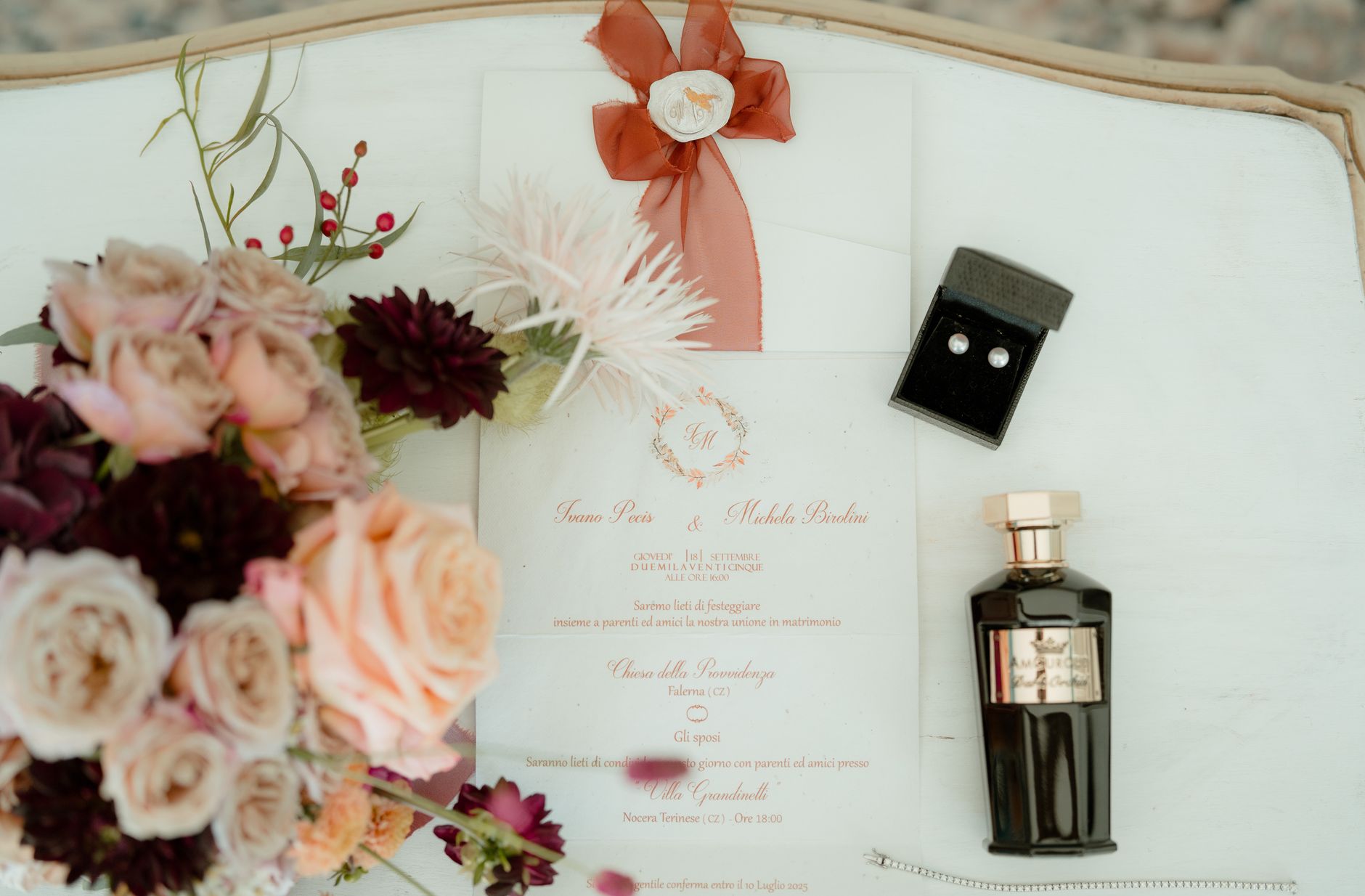
Guests often form their first impression of your wedding from the invitation, but the details they notice most are not always the decorative ones. This guide breaks down 43 practical choices that make an invitation feel modern, clear, welcoming, and genuinely useful before the big day.
1–4. The first impression: format, hierarchy, tone, and restraint
1. Choose a format that matches the way guests will use the information, whether that means a single-page invitation for a simple celebration, a folded card for several event details, or a digital version that can be opened easily on a phone. 2. Give the eye an obvious starting point by making the couple’s names, the invitation line, and the date more prominent than secondary information; guests should understand the core announcement within a few seconds. 3. Let the wording establish the tone before the design does: formal language suits a traditional ceremony, while warm, direct phrasing can feel more natural for a relaxed or modern gathering. 4. Use restraint deliberately, because generous spacing, a limited colour palette, and one or two type styles often look more considered than filling every area with decoration.
5–8. Names, hosts, and invitation wording
5. Check every name carefully, including spelling, accents, middle names, and the order in which people should appear; an invitation is a personal document, so a small error can feel disproportionately noticeable. 6. Decide whether to name the hosts, the couple, or both, and make the wording reflect the actual relationship and family dynamics rather than copying a traditional formula that does not fit your celebration. 7. Keep the invitation sentence specific enough to be meaningful, but avoid stacking several clauses into one block that guests must reread; short lines are easier to scan and easier to lay out attractively. 8. Read the wording aloud to catch phrases that sound stiff, ambiguous, or unlike you, then ask one trusted person who knows the event well to check whether the invitation gives the impression you intend.
9–12. Date, time, and ceremony information
9. Spell out the wedding date in a way that cannot be misread, especially if guests may be travelling internationally or if the design uses a numerical date. 10. Include the ceremony start time prominently and state whether guests should arrive earlier; a start time alone does not tell someone how much buffer to allow for parking, security, seating, or a shuttle. 11. If the ceremony and reception happen at different times, show the sequence clearly instead of relying on a decorative divider or a line break that may disappear in a digital version. 12. Decide whether the printed time is the true start time or the guest arrival time, then apply that choice consistently across the invitation, wedding website, transport notes, and any reminder message.
13–16. Venue details guests can act on
13. Write the venue name and full address exactly as it appears in reliable map or booking information, including the town or city and any useful building name. 14. Add a venue-specific instruction when it prevents a predictable problem, such as using a particular entrance, checking in at reception, allowing time for a walk across a large property, or avoiding a private access road. 15. Do not assume that a venue name is enough for out-of-town guests, because similarly named locations, multiple buildings, and weak mobile signal can turn a familiar place into a stressful arrival. 16. Test the address from a guest’s perspective by opening it in a map app, checking the pin, and confirming that the listed entrance leads to the area where guests actually need to go.
17–20. Dress code that actually helps
17. Use a recognizable dress-code term only when it accurately describes what you expect, and add a brief plain-language explanation if the label could be interpreted in several ways. 18. Mention practical context that affects clothing, such as an outdoor ceremony, uneven ground, a beach setting, a cool evening, or a formal indoor reception, because guests make better choices when they understand the environment. 19. Avoid wording that sounds like a demand for expensive purchases; a useful dress note explains the atmosphere while leaving guests room to work with what they own. 20. If colour guidance is important, state whether it is a preference, a wedding-party distinction, or a meaningful request, and consider whether the instruction could unintentionally exclude guests who have limited options.
21–24. RSVP instructions and deadlines
21. Make the RSVP method unmistakable by naming the website, response card, email address, or other route guests should use, rather than printing a link or QR code without explaining what it is for. 22. Set a deadline that gives you enough time to confirm catering, seating, transport, and other supplier numbers, while allowing guests a reasonable opportunity to check their schedules. 23. Tell guests what information to submit, such as attendance, meal selection, dietary requirements, song requests, or accommodation needs, so they do not wonder whether a separate message is required. 24. Before sending invitations, test every response route on the devices guests are likely to use and arrange a simple follow-up process for missing replies; a polished invitation cannot compensate for an RSVP system that loses answers.
25–28. Plus-ones, children, and invitation scope
25. Make the intended guest list clear through addressing, individual names, or a carefully written note, because vague wording can create awkward conversations and unequal assumptions. 26. If plus-ones are included only for some guests, avoid explaining the policy publicly on the invitation; instead, make each guest’s allowance clear in their personal invitation or RSVP form. 27. State whether children are invited, whether the ceremony and reception follow different rules, and whether childcare information is available, using considerate language that focuses on logistics rather than judgment. 28. Check that the names and RSVP choices match the invitation scope, since a form that lets someone add an uninvited guest can undermine an otherwise careful explanation.
29–32. Accessibility and readability
29. Use sufficient contrast between text and background, especially for pale colours, thin lettering, textured paper, and screens viewed outdoors or at low brightness. 30. Choose type that remains legible at the actual printed size, and avoid setting essential information in all capitals, tightly spaced script, or a colour that is difficult to distinguish. 31. Keep the most important details in a logical reading order and do not rely on colour, icons, or decorative symbols alone to communicate meaning; guests should still understand the invitation if those elements are missed. 32. Offer an accessible digital version or plain-text information when appropriate, and make sure the wedding website works with zoom, mobile screens, and common assistive technologies rather than treating accessibility as an afterthought.
33–36. Digital invitations, links, and consistency
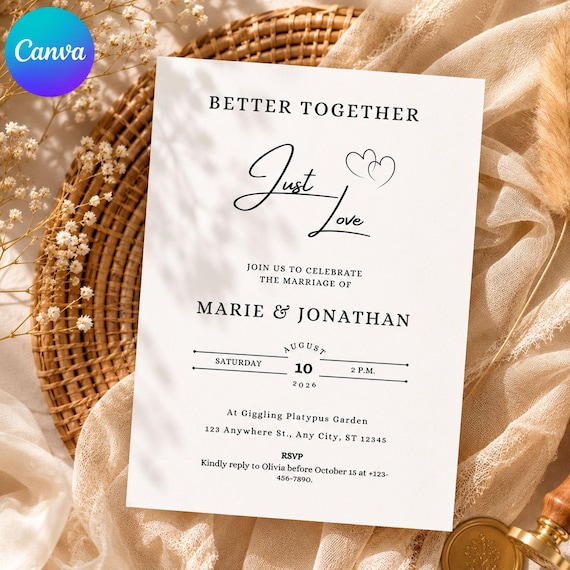
33. If you use a digital invitation, design for the smallest screen on which guests are likely to read it, with readable text, sensible loading time, and buttons or links that are easy to tap. 34. Keep the invitation, wedding website, RSVP form, and reminder messages consistent in the essentials, including the date, time, venue, dress guidance, and response deadline; conflicting versions create more work for guests and for you. 35. Give every link a clear purpose and test it after exporting or publishing, because a link that worked in the editing tool may break in the final file or open the wrong page. 36. A minimalist editable design such as the Nothing Fancy Just Love wedding invitation template can be useful when you want a clean starting point for a digital or printable invitation, provided you customise and proof every detail rather than treating the template as finished copy.
33–36. Digital invitations, links, and consistency
Shop the find ↗37–40. Travel, accommodation, and event flow
37. Add a wedding website or information card when guests need more than the invitation can comfortably hold, particularly for hotel suggestions, transport times, parking, accessibility notes, or several wedding-weekend events. 38. Explain the journey between locations when it matters, including whether guests should drive, use a shuttle, allow time for transfers, or expect a walk between ceremony and reception spaces. 39. Share an accommodation booking deadline only if it is accurate and useful, and avoid implying that a room block is guaranteed unless you have confirmed the terms with the hotel. 40. If guests need to know about a welcome event, next-day gathering, or ceremony-only invitation, label each event clearly so nobody mistakes an optional occasion for a required part of the wedding day.
41–43. Proofing, printing, and the final guest test
41. Proof the invitation in three ways: read the text slowly for spelling and punctuation, compare every fact against your master planning document, and ask someone unfamiliar with the arrangements to explain what they think will happen. 42. Order or create a final sample before committing to the full batch, checking paper weight, colour, trimming, envelope fit, QR-code readability, and whether small text remains clear in normal lighting. 43. Perform one final guest test by asking a friend to answer practical questions without additional context, such as where to go, when to arrive, what to wear, how to RSVP, and whether they can bring a guest; every question they cannot answer is a signal that the invitation needs clarification.


