Birth-month flowers can turn a standard wedding-party gift into something personal, but the most meaningful keepsake is one that suits the recipient’s taste and remains useful or displayable after the wedding. Use the ideas below to choose flowers thoughtfully, build a cohesive design and add details your bridesmaids and attendants will genuinely want to keep.
Start with accurate birth-month flower research
Before ordering or designing anything, make a simple list of each bridal-party member’s birth month and check the flower traditionally associated with it. Birth-flower lists are not completely uniform, so compare a couple of reliable references and choose one system for the whole group rather than mixing sources without explanation. If a month has more than one commonly listed flower, select the option that best suits the person’s personality, your wedding palette or the design’s visual balance. Do not present the symbolism as an objective personality description. Meanings vary across traditions and flower guides, so frame them as an extra layer of intention: “I chose this because it is associated with…” is more considerate than assuming the flower defines someone. Keep your research notes with your order details, especially if a florist, illustrator or engraver will need the exact flower names.
Create a shared visual language without making every gift identical
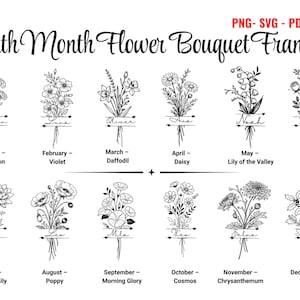
A bridal-party collection usually looks more intentional when every keepsake follows a few consistent rules: the same background colour, typography, border style or packaging, for example. Let the flower, name and small personal details change from person to person. This gives everyone an individual piece while still making the gifts feel like part of one wedding story. Build a quick reference sheet before production. Include each recipient’s name, birth month, chosen flower, preferred spelling, colour notes and the final wording. Decide whether you want realistic botanical artwork, a loose wildflower style, line art or a monogram. A bouquet-style design resource such as the Birth Month Flower Bouquet Frame SVG Bundle can be useful when you are creating matching cut, print or laser projects, provided you verify the file format and usage terms before making anything.
Create a shared visual language without making every gift identical
Shop the find ↗Add the recipient’s name, not only the wedding date
A wedding date marks the occasion, but the recipient’s name is what makes a keepsake feel intentionally chosen for them. Consider using their first name, initials, full name or a nickname they actually use. For a more understated result, place the name on the reverse, inside a frame mount or on a small accompanying card rather than making it the largest element. Proofread names with particular care, including accents, hyphens, middle initials and married-name choices. If someone may change their surname after the wedding, avoid assuming that the new name is wanted on the gift. A first name, initials or birth flower can remain personal without making the keepsake dependent on a future legal or social change. Send a digital proof when possible and ask each person to confirm only the details that are appropriate to share.
Write a short note explaining the flower’s significance
Pair the object with a note of two or three sentences explaining why you chose that particular flower. Mention the person’s role in the wedding or a memory you share, then connect it to the flower without forcing a grand metaphor. For example, you might refer to how they helped you stay calm during planning, made you laugh through difficult decisions or supported your relationship long before the wedding day. Avoid copying a generic message into every card. A practical way to personalise efficiently is to write one specific detail for each recipient before you start assembling the gifts. Keep a backup copy of the notes, since they can also become captions in a private wedding album or reminders when you are writing thank-you messages later.
Choose a format that fits how the person lives
The same artwork can become a framed print, a card, a luggage tag, a compact mirror insert, a bookmark, a fabric label or another small object, but the best format depends on the recipient. Someone with limited display space may prefer a flat paper keepsake, while a person who enjoys decorating may appreciate a framed piece. Ask yourself where the item is likely to go after the wedding: a desk, bedside table, memory box, travel bag or drawer. Think about durability as well as appearance. A delicate paper design needs protection from moisture and bending; a fabric item needs secure stitching; a framed piece needs a safe way to transport it before the ceremony. Avoid choosing a bulky object simply because it looks impressive in photographs. A smaller keepsake that is easy to store can be more successful than something elaborate that creates clutter.
Turn the keepsake into a useful part of the wedding day
A keepsake can do double duty during the celebration. Use a birth-flower card as a place setting, attach a small illustrated tag to a gift bag, or display each person’s framed design near their getting-ready space before handing it over. This gives the piece a visible role without making the wedding feel like a product showcase. If the object will be used at the reception, make sure it does not obstruct plates, glasses or name cards. Plan the handover carefully. Label every item in its packaging, keep the gifts away from makeup, drinks and floral water, and ask one trusted person to distribute them. If photographs are important, decide whether you want a quick group image of the keepsakes or a quieter moment when each person reads their note. The goal is to make the presentation comfortable, not to create another timed event for the bridal party to manage.
Use layered personalisation instead of adding every detail
Meaningful design is not the same as crowded design. Choose two or three personal elements, such as the birth flower, name and a short phrase, then leave enough empty space for the artwork to breathe. Adding a wedding date, role title, long quotation, colour code and several symbols can make the item difficult to read and less likely to suit the recipient’s home. Create hierarchy before sending the design to print or cut. The name should be legible at the size the object will be viewed, while the flower can carry the visual interest and the date can remain secondary. Test the design in a rough printed version rather than judging it only on a bright screen. Thin lines, small lettering and pale colours can disappear when printed, engraved or resized.
Make a memory box around the floral piece
A single object becomes more emotionally useful when it is part of a small, organised memory set. Add a dated note, a copy of the ceremony reading, a ribbon sample, a pressed flower from the wedding stationery or a photograph from the day, depending on what is appropriate for the recipient. Keep the contents flat and label the box or envelope so it is easy to understand years later. Do not include anything irreplaceable until you know the container is safe and practical. Test whether the paper fits without folding, whether adhesives are archival or likely to stain, and whether the box can be stored in an ordinary cupboard. If you include a real flower, research the drying method and warn the recipient that natural materials can change colour and texture over time. The birth-flower artwork can remain the stable centrepiece even if other contents age.
Coordinate the keepsake with a wider bridal-party reveal
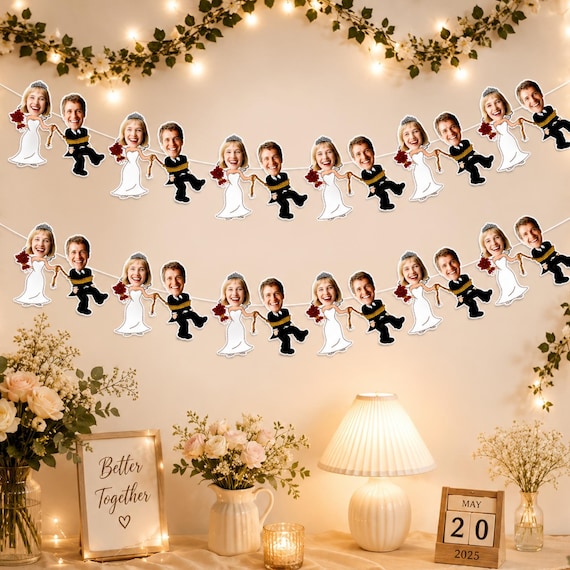
If you want to give the gifts during a bridal shower, engagement gathering or getting-ready morning, use the reveal to tell the story behind the flowers. A personalised photo garland or custom face wedding banner can help create a celebratory backdrop for the gathering, while the birth-flower keepsakes remain the quieter, individual gifts. Keep the two ideas visually compatible through repeated colours or a simple floral accent rather than trying to match every detail. Check the practical requirements of the event before ordering any decoration. Confirm the spelling of names, the number of pieces, the hanging location and whether the venue allows adhesive, hooks or suspended décor. Keep personalised event decoration separate from the keepsakes during packing so a banner does not become creased or accidentally handed to the wrong person. The backdrop should support the moment, not compete with the more personal exchange.
Coordinate the keepsake with a wider bridal-party reveal
Shop the find ↗Plan production around the wedding timetable
Personalised work takes longer to correct than off-the-shelf buying because every name, flower and proof needs checking. Set an internal deadline well before the wedding, allowing time for design approval, production, delivery, inspection and replacement if something arrives damaged. If you are making the items yourself, add time for material testing and for producing one complete sample before cutting the full set. Create a simple checklist with one row per recipient. Record the approved spelling, chosen flower, design version, production status, packaging status and delivery location. Inspect every piece when it arrives instead of leaving the check until the day before the wedding. Look for print shifts, scratches, weak joins, bent corners, missing components and colour differences between items. A calm quality check protects the emotional moment from avoidable logistical problems.
Give the keepsake with a future-facing message
Close the gift with a message that looks beyond the ceremony. Thank the person for the part they played in your life and in the wedding, then say how you hope they will use, display or remember the piece. A simple line such as “I hope this brings back the laughter from our wedding morning” can feel warmer than a formal statement about the flower’s symbolism. Finally, allow the recipient to respond in their own way. Some people will display the item immediately, while others will keep it safely packed or combine it with another collection of memories. That choice does not reduce its meaning. The strongest birth-month-flower keepsake is not the most expensive or elaborate one; it is the one that shows careful attention, arrives in good condition and gives the recipient a genuine reminder of being valued.