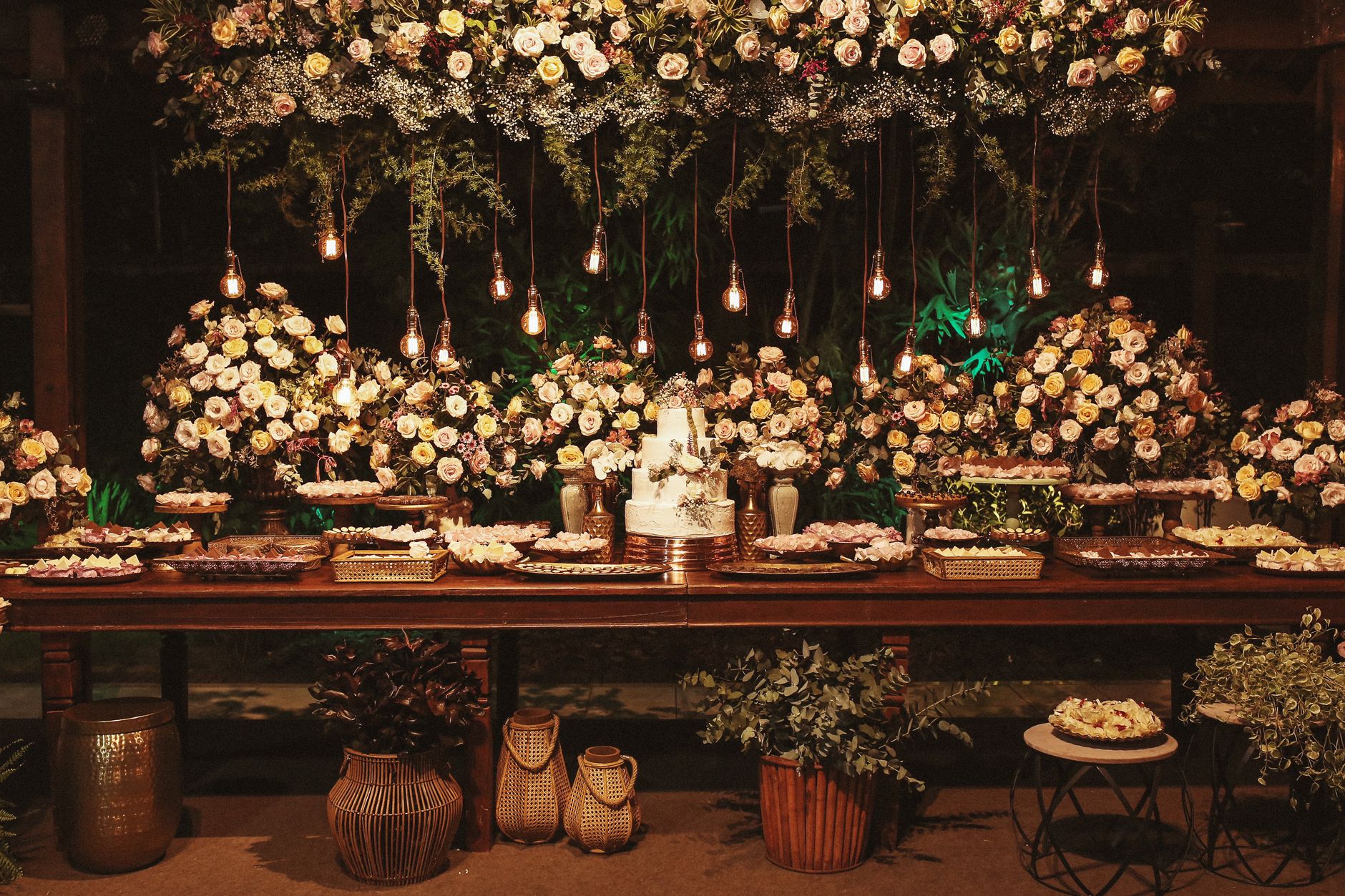
A good reception table does not need a loud game or a list of embarrassing questions to bring people together. Give guests a few natural points of connection—shared context, gentle prompts and small ways to participate—and conversation usually follows. These practical ideas help mixed groups settle in, especially when relatives, friends and colleagues are meeting for the first time.
Start with a table identity guests can understand immediately
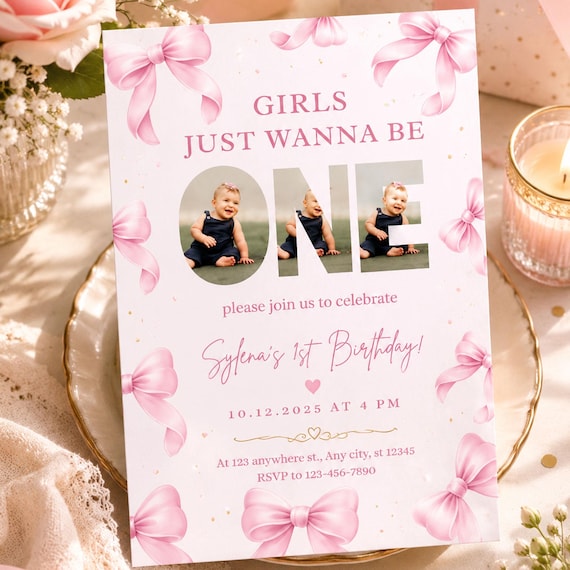
Give each table a simple identity that offers guests an instant opening line. This might be a place meaningful to the couple, a favourite shared meal, a season, a song title or a chapter of their story. The best choices are specific enough to invite questions but not so personal that guests need a full explanation before they can join in. A sign such as “The First Flat” or “Cornwall” naturally prompts, “How is that connected to you two?” Keep the wording short and add one sentence of context beneath it. Avoid turning the sign into a paragraph of wedding lore that guests must read while standing in a crowded room. If you use a template or editable design, check every line for event-specific wording before printing. For example, {{listing:4447918025}} is a first-birthday invitation, so it is a useful reminder to check that a design’s text, tone and occasion genuinely match a wedding rather than assuming an attractive template is interchangeable.
Start with a table identity guests can understand immediately
Shop the find ↗Seat people with one comfortable connection already in place
Conversation becomes much easier when every guest has at least one familiar person nearby, but avoid grouping tables so tightly that nobody meets anyone new. A useful approach is to mix one or two established connections with a couple of guests from another part of the couple’s life. For instance, place a cousin beside a university friend and a colleague who already knows one member of the couple. That creates a bridge rather than a table of strangers. Use the seating plan to prevent predictable discomfort. Do not place someone who is hard of hearing at the far end of a noisy table, separate guests who rely on translation support, or assume a single guest wants to be made the centre of attention. If children, older relatives or guests with access needs are present, consider sightlines, chair space and the distance to toilets as part of the conversation plan: comfort is often the foundation for participation.
Place one low-pressure prompt at each setting
A single prompt can help a quiet table get started, provided it feels optional and easy to answer. Try questions such as “What is a meal you hope the couple tries together?” “How do you know the newlyweds?” or “What is one small thing that makes a celebration memorable?” These invite stories without demanding a performance, confession or public declaration of affection. Print the prompt on a small card, menu, place card or discreet sign rather than scattering several cards across the table. Guests should be able to ignore it without feeling watched. Avoid questions that assume everyone knows the couple equally well, such as asking for the date of their first kiss, and avoid prompts that require guests to reveal private information. One thoughtful question is more effective than a stack of generic icebreakers.
Use a table captain only when the role is genuinely helpful
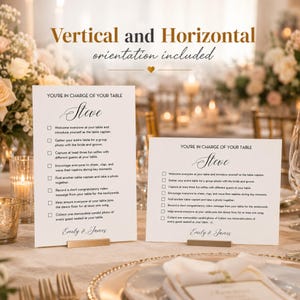
If your reception includes a planned activity, nominate a friendly table captain to explain it, start it at a natural pause and make sure nobody is left out. The role should be a gentle facilitator, not an entertainer. Choose someone who can read the room, explain instructions clearly and stop once the table has begun talking on its own. Tell them in advance that participation is optional and that they do not need to collect personal stories or force every guest to answer. An editable activity such as {{listing:4565919272}} can work well when you adapt the wording to your guests, timing and table size. Before printing, remove anything that feels too competitive, confirm that the instructions fit on one page and decide whether answers stay at the table or are shared with the room. A table activity should support conversation, not compete with dinner, speeches or the dance floor.
Use a table captain only when the role is genuinely helpful
Shop the find ↗Create a shared memory prompt that does not demand a long speech
Invite guests to contribute a short memory, recommendation or wish rather than asking them to write a formal message. Prompts such as “A place the couple should visit,” “A piece of advice for ordinary Tuesdays” or “A song that belongs on their future road-trip playlist” give people room to be funny, practical or heartfelt. They also work for guests who do not know both partners well. Provide clearly labelled cards and a container if you want to keep the responses, but explain what will happen to them. Guests are more likely to write honestly if they know whether the couple will read them privately, display them later or use them in a keepsake. Include pens that write smoothly and a few spare cards, then stop collecting when the table is ready for the meal. The goal is a small exchange, not another task guests must complete.
Make the menu a conversation starter
Food gives people an easy subject, especially when the menu includes a family recipe, a regional ingredient or a dish connected to the couple. Add one brief note such as “Inspired by the couple’s first trip together” or “A recipe from the bride’s grandmother,” but confirm the story and spelling before printing. A genuine detail creates curiosity without requiring guests to know any wedding trivia. Be precise and inclusive in the practical information. Mark vegetarian, vegan and common allergen-friendly choices clearly, and make sure the wording does not imply that a guest must justify their dietary needs. If guests are choosing from a shared menu, add a question like “Which dish would you serve at your ideal Sunday lunch?” It encourages opinions while keeping the focus on something everyone can discuss comfortably.
Put a small object at the centre of the table with a story attached
A centrepiece can do more than fill space if it gives guests something concrete to notice. Use a framed photograph, a postcard from a meaningful place, a well-loved book, a recipe card or a small object connected to the couple’s interests. Add a short caption explaining the connection, because an unexplained object may look decorative but will not necessarily prompt conversation. Choose one or two objects rather than creating a museum display. Guests need clear sightlines across the table, enough room for glasses and plates, and space to move their chairs. Avoid fragile items at elbow height or anything that blocks faces. A good centrepiece offers a question—“How did they find this place?” or “Who recognises this recipe?”—without requiring guests to touch, move or decode it.
Give guests a reason to change seats or meet another table
A short, optional movement-based idea can connect people beyond their assigned table. You might invite guests to find someone who has travelled furthest, locate the person who introduced the couple or compare favourite late-night snacks. Keep the activity open for several minutes rather than announcing that every guest must stand up and participate at once. Guests who prefer to remain seated should have an equally comfortable way to take part. Timing matters more than novelty. Do this during a natural gap—perhaps before dessert or while the room is resetting—not during speeches, active service or a meaningful song. Give one clear instruction and a visible stopping point. If the activity needs multiple rules, scoring or a microphone, it may be better suited to a dedicated game segment than to casual table conversation.
Use wedding-party or family knowledge without turning it into a quiz
Guests often want to know how different people are connected to the couple, so make those links visible in a low-key way. A small note on a place card could say “Maya—work friend from the museum” or “Daniel—cousin of the groom,” provided the person is comfortable with that description. This gives strangers an easy opening: “How do you know them?” and helps prevent the awkwardness of trying to guess relationships. Ask the couple to approve every description, particularly when family structures, former workplaces or sensitive histories are involved. Do not label someone by a job they have left, a relationship status or a nickname they dislike. The purpose is to offer context, not to publish biographies. Keep the descriptions consistent in length and tone so no guest feels singled out or reduced to a punchline.
Build in a quiet option for guests who dislike group activities
A welcoming table should work for observers as well as enthusiastic participants. Add a simple alternative such as a wedding-themed crossword, a space for private advice cards, a small photo prompt or a question guests can answer silently on their place card. These options give introverted guests, tired parents and people with social anxiety something to do without making their participation visible to the whole table. Do not describe the quiet option as a consolation prize. Present it alongside the social prompt and make both completely optional. Keep materials uncluttered, use readable type and avoid activities that require guests to know the couple’s entire history. Conversation should remain available, not compulsory; guests are more likely to join in when they know they can step back without explanation.
Test the table experience before the wedding day
Set up one complete sample table at home or at the venue and sit in several different seats. Check whether guests can see one another over the centrepiece, reach the prompt card, read the menu in the available light and hear someone speaking from the opposite side. Ask two people who do not know the wedding details to look at the table for five minutes and tell you what questions or assumptions it creates. Use their feedback to remove anything that feels confusing, overly intimate or difficult to use. Confirm that printed instructions match the final schedule, that pens work, that table signs are visible from the room entrance and that staff know which materials should remain on the tables. The best conversation design is almost invisible: guests notice the welcome, not the machinery behind it. End with one clear principle for the day—offer an opening, then let people take the conversation where it naturally goes.


